October – December 2025.
When you live in New Zealand, just about everywhere is a long flight away. So when we were invited to a family wedding in UK for October 2025, we decided to make the most of the journey to the Northern Hemisphere and tack on a two-month bikepacking trip too. It would be our first ride longer than a week since we reached Ushuaia in May 2023.
Morocco’s close proximity to the UK and western Europe and the affordability of flights gave it a lot of appeal – it’s an affordable place to travel in too, which always ranks highly in our criteria for bikepacking destinations. Neither of us had visited the African continent before, but we’ve long been aware of the beauty and adventure potential of the Atlas mountains, so this country had always been on our radar. North Africa has held a presence in my imagination since childhood, when I was captivated by the legends of the Sahara and its nomadic tribes, as well as popular literature and the weird and wonderful creatures of David Attenborough documentaries.
It’s a country well known for stunning landscapes, rich and diverse cultural heritage and warm hospitality. More recently, the Atlas Mountain Race has put Morocco in the spotlight as a bikepacking destination.
The popular and varied Route of Caravans (2000km) would form the backbone of our north-south ride from Tangier, on the Mediterranean coast, to Tiznit on the Atlantic coast in the south of the country. Just before we started the High Atlas traverse of Kings of the Atlas was also published, so we incorporated some of that too, joining it via the remote M’Goun canyon shortly after starting the southern leg of Caravans, before riding back east to rejoin Caravans in the Anti Atlas. I’ll explain the geography more later on, and there’s a map of our final 2400km ride at the end of the post.
We rode mid-October to mid-December, through the end of Morocco’s autumn and into winter. In the north we experienced some very hot days, until south of Fez. Once in the High Atlas it cooled considerably with the arrival of the first winter storm in mid-November, which brought light snow to the highest ranges, but daytime riding temps were still agreeable. A month later, after we had finished the High Atlas and carved a big clockwise semi-circle to the Sahara and back NE through the Anti Atlas towards the coast, the High Atlas were plastered with snow.
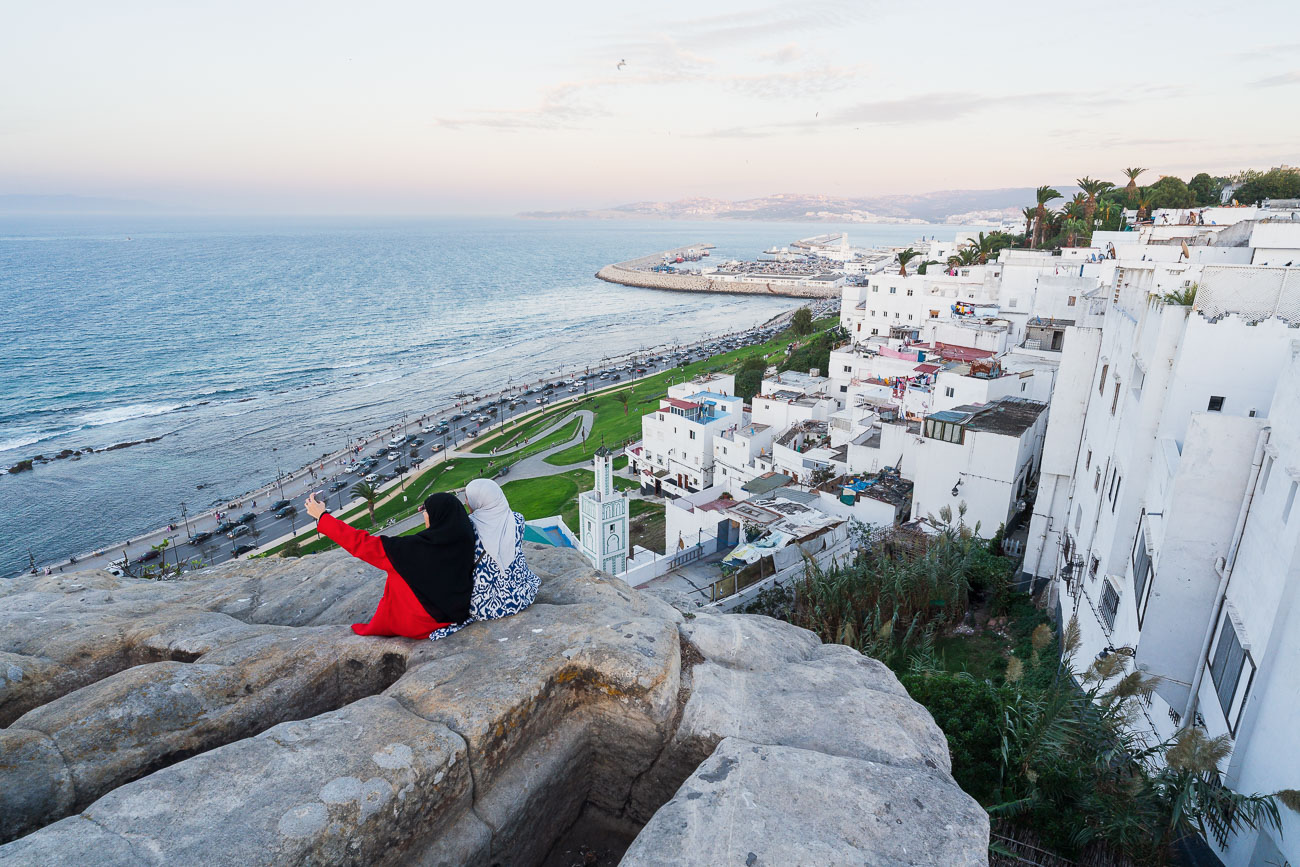
We spent three nights in Tangier after flying in from the UK. This port city, on the warm Mediterranean coast, is the start/finish point for Route of Caravans. For us it was a great introduction to Morocco. Our reading and people’s recommendations prior to arriving there had formed the impression of a port city with limited appeal that wasn’t worth lingering in, but we really enjoyed the city’s historic quarter and sampling our first tastes of Moroccan food and culture.
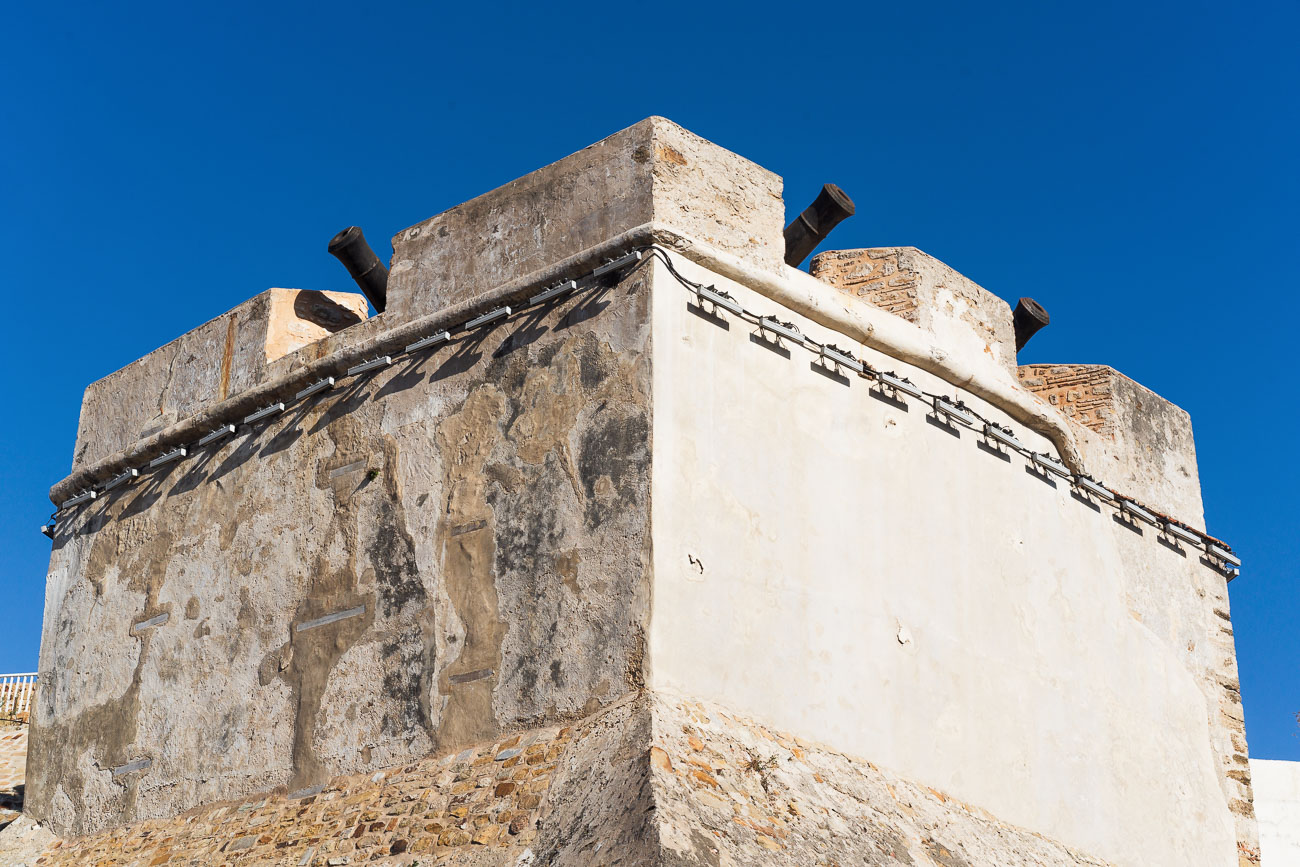
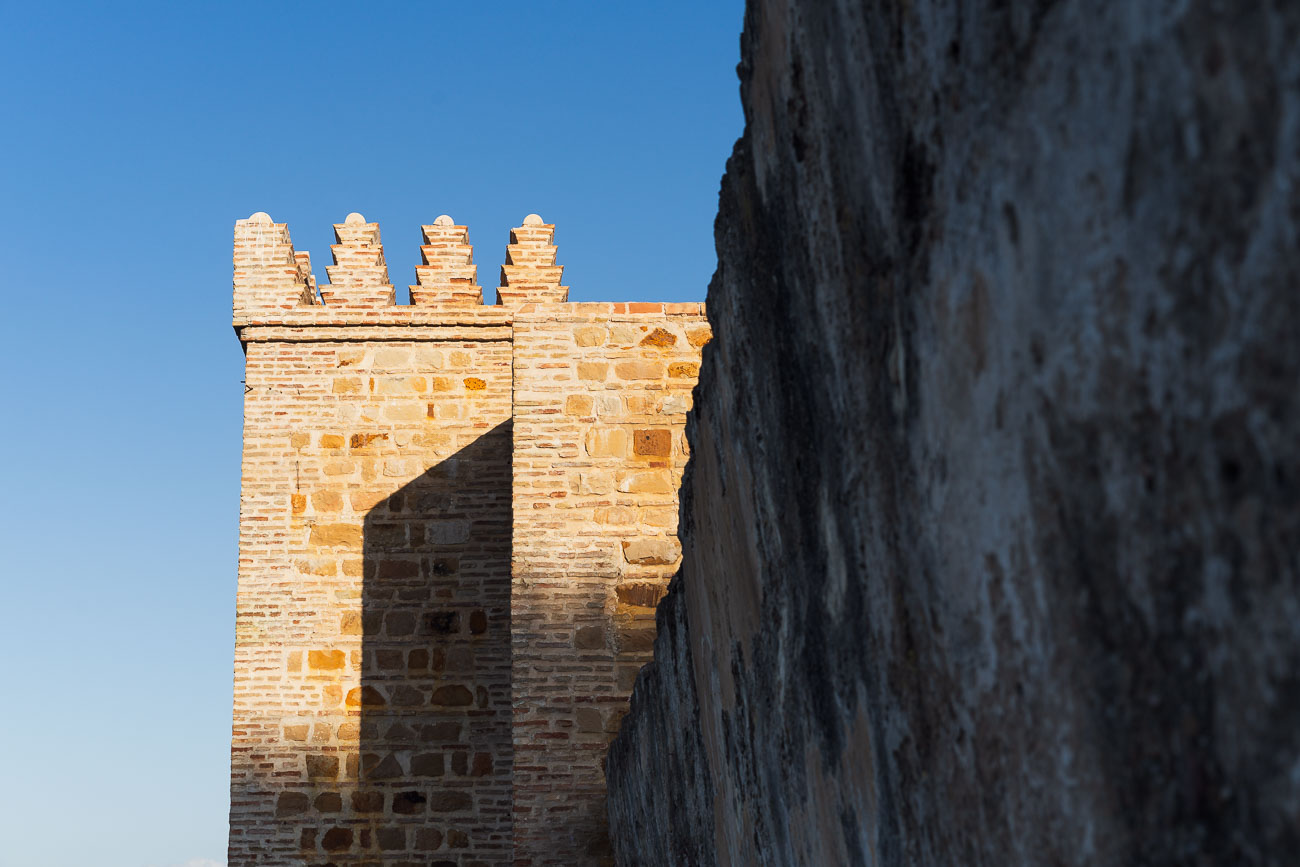
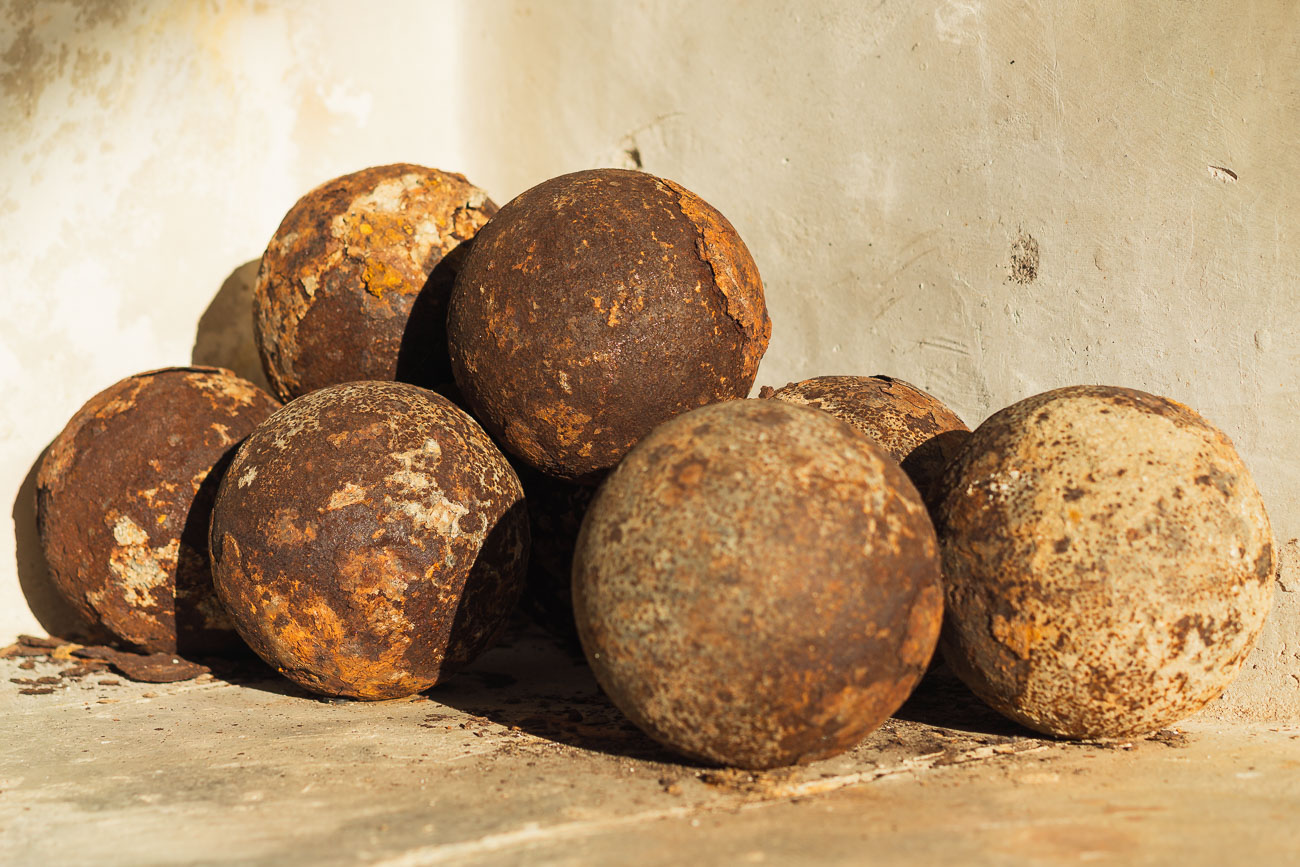
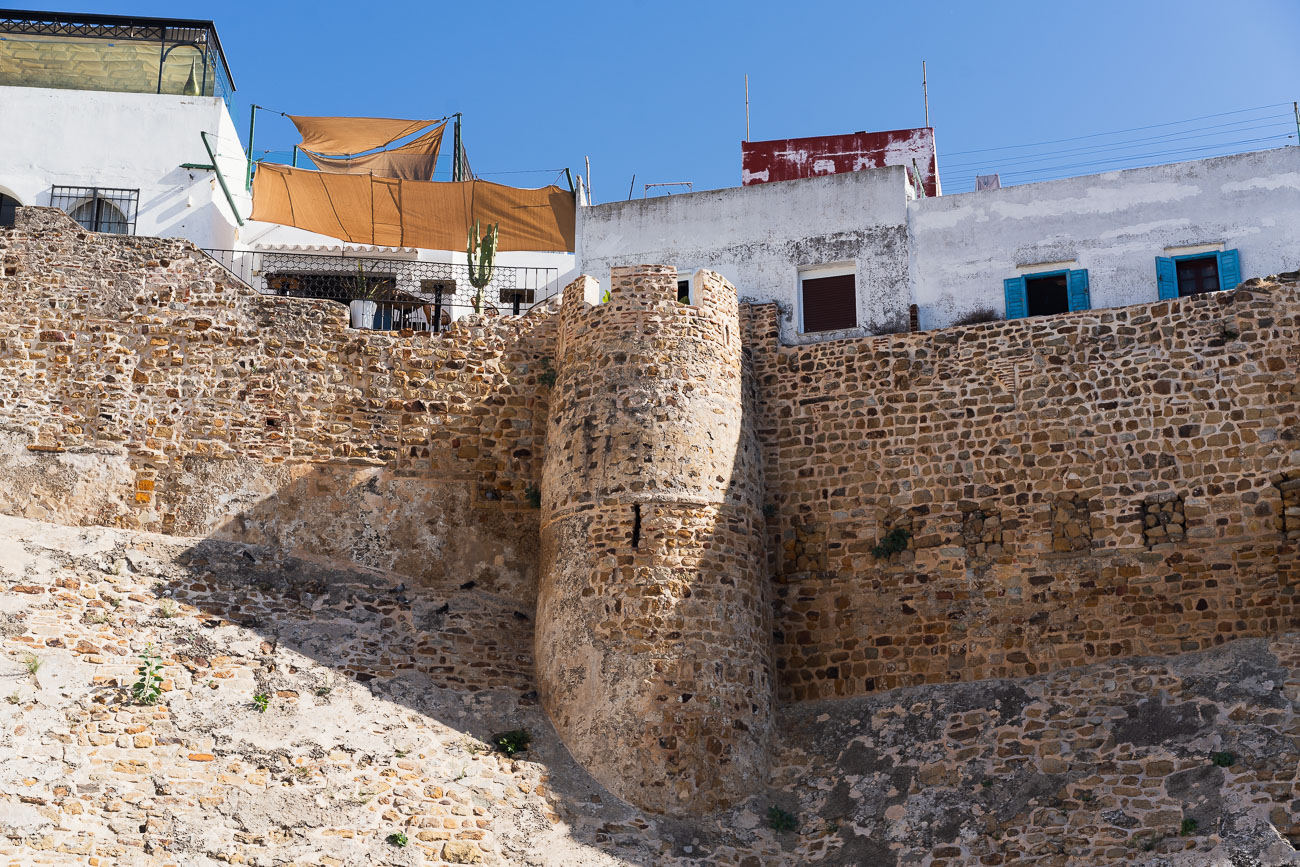
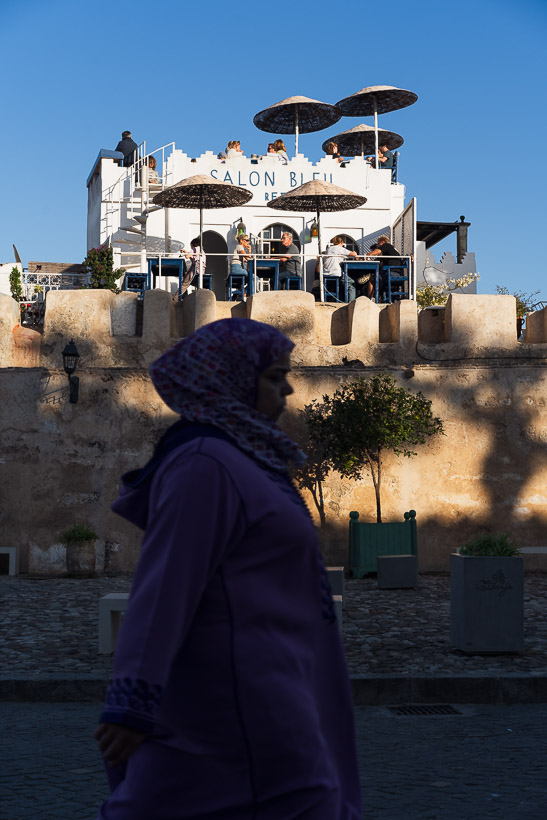
Like most of the Moroccan towns and cities we visited, Tangier’s ancient heart centres around its kasbah (fortified citadel) within the medina, which is the walled core of the ancient city, containing souks (markets), mosques, residences, bathhouses and fountains, separated by a labyrinthine network of tight alleyways. We spent hours exploring the rambling hillside streets and lanes, whitewashed apartments, old forts and coastal defences, with a human history going further back than any other place we’ve ridden bikes.
The excavations in the rock in the foreground of this photo are part of a hilltop necropolis of 3000 year-old tombs, one of few traces of the seafaring Phoenician (Canaanite) civilisation which founded Tangier around 1000BC. These days it’s a popular spot for locals and tourists alike to enjoy sunsets over the Strait of Gibraltar.
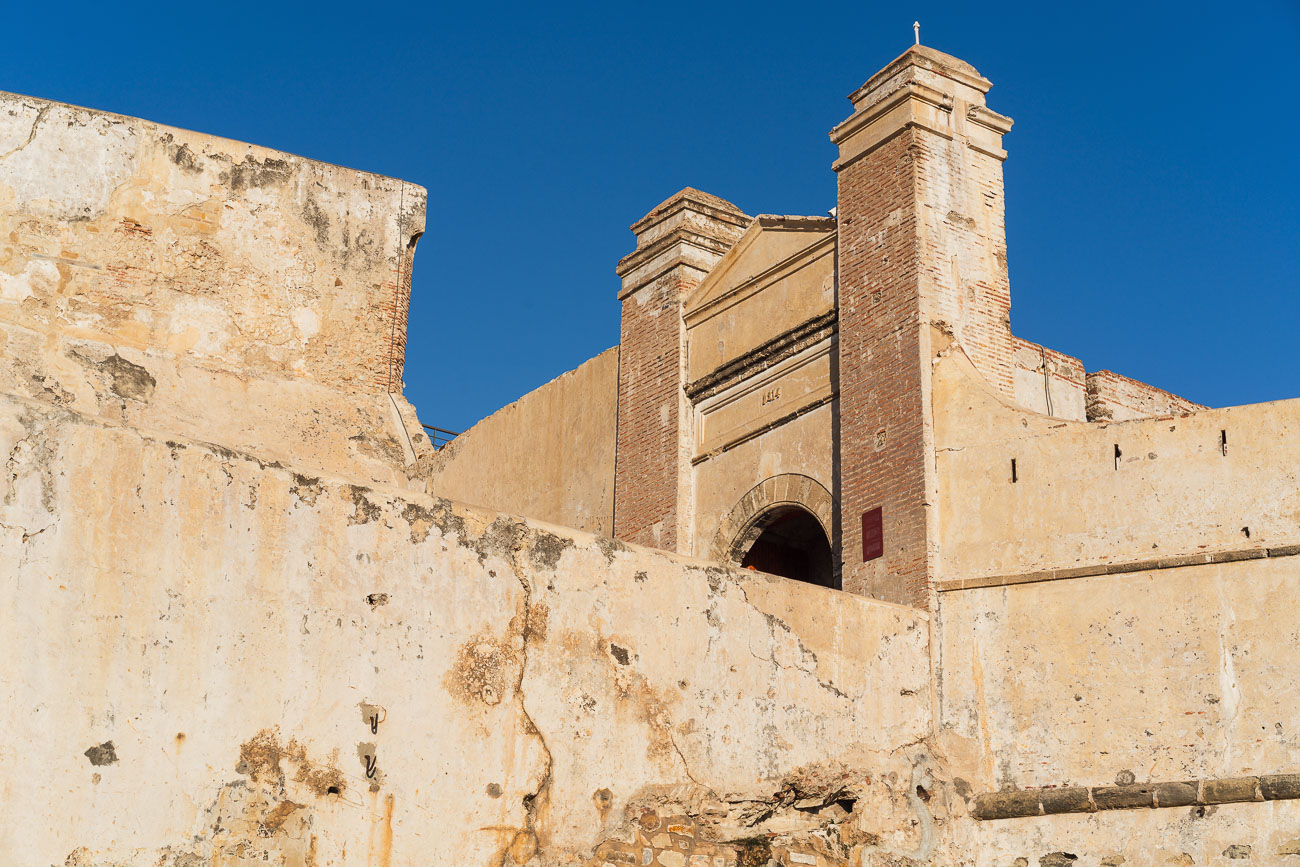
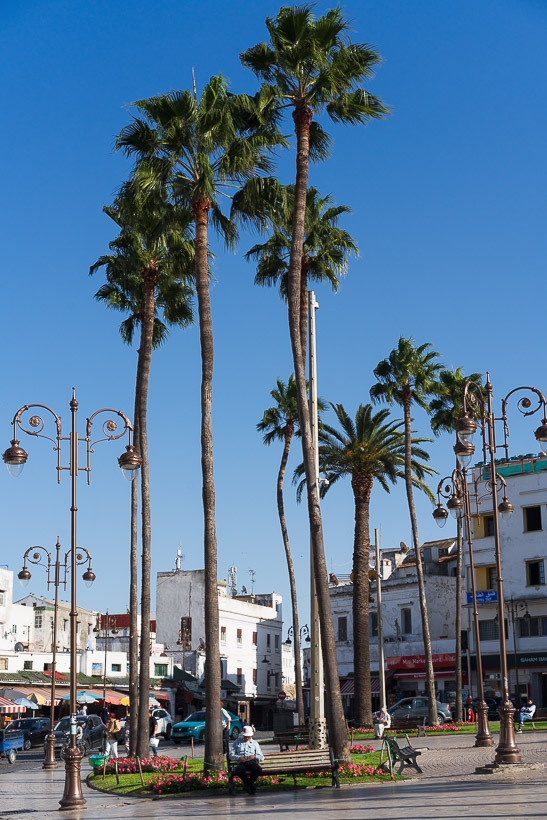
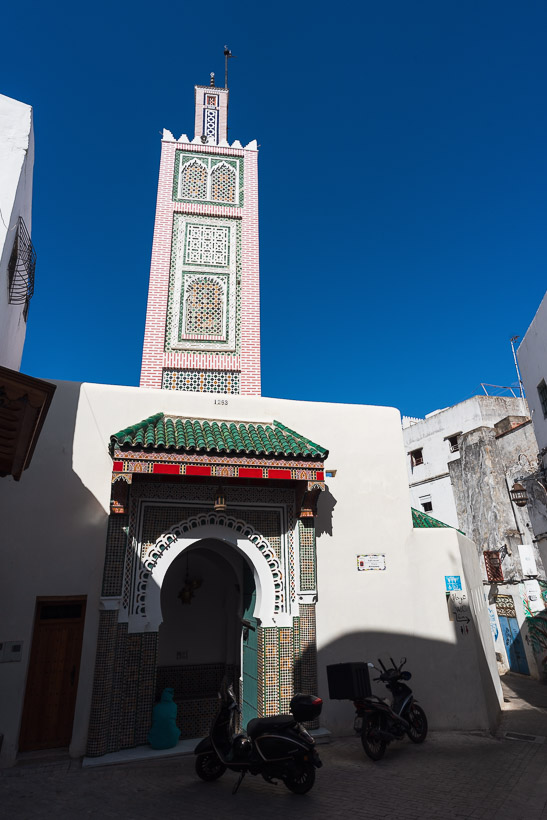
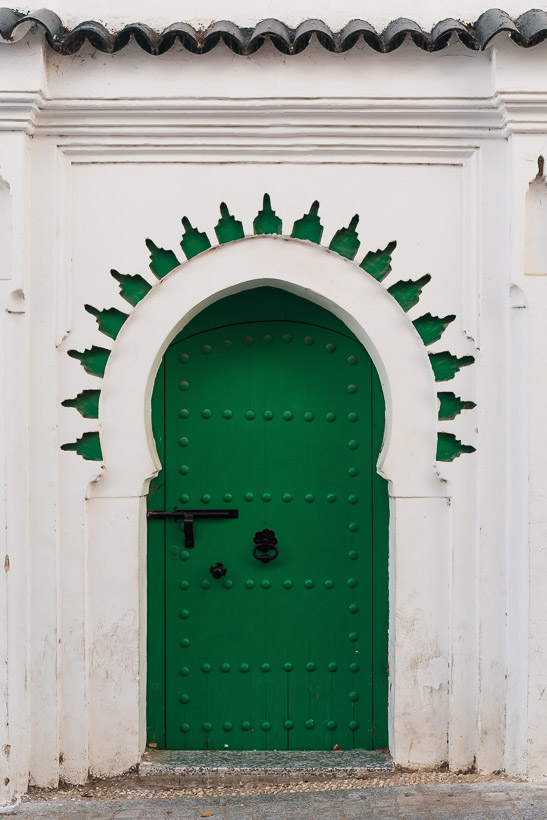
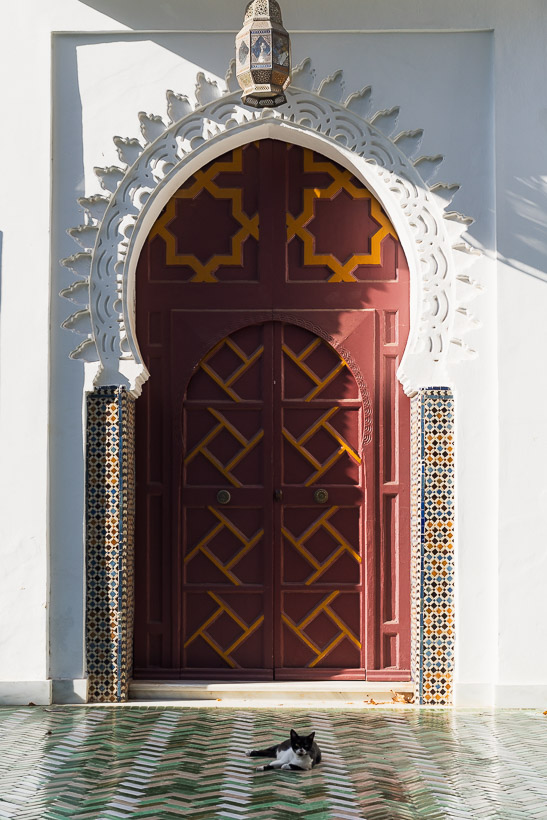
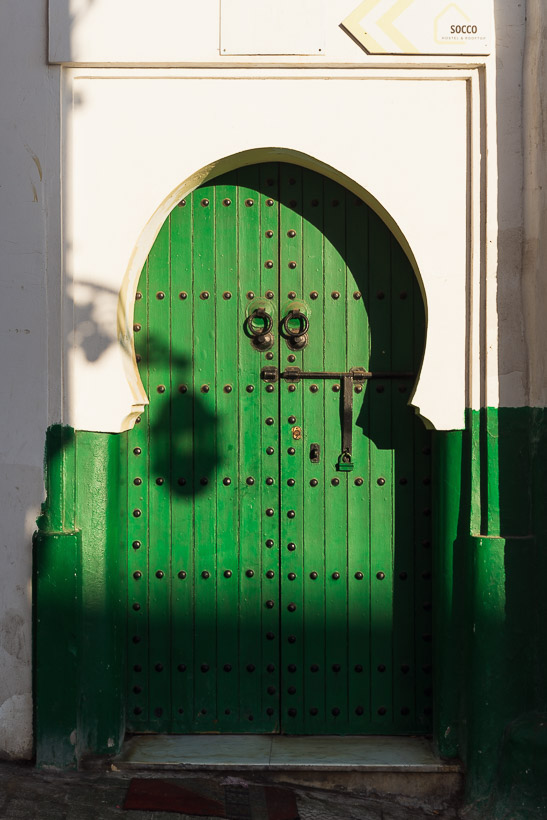
We have bikepacked in Indonesia (Sumatra) and Malaysia, so have had some experience of Muslim culture before, but this was our first time travelling in the Maghreb region, as north west Africa is known in the Arab world, and our first exposure to Arab Muslim culture or that of the Amazigh, Morocco’s indigenous groups. Both of us really enjoy the distinctive visual aesthetics and architecture of Arabic culture, with its arched doorways, biomorphic islimi designs, and geometric tiling.
When it came to communication, our English and limited Spanish only got us so far and soon we were lost in a confusion of Moroccan Arabic, Amazigh languages, French and Spanish and feeling like travel rookies again, getting by with borrowed words and sign language.
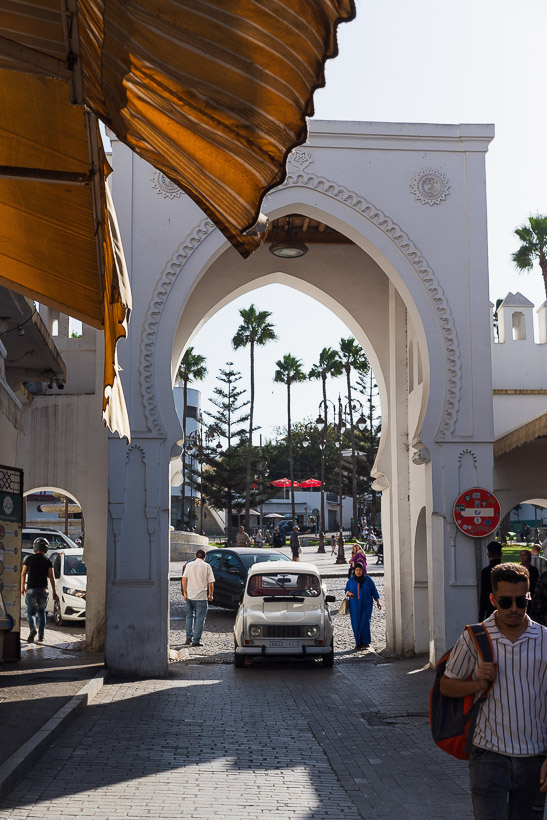
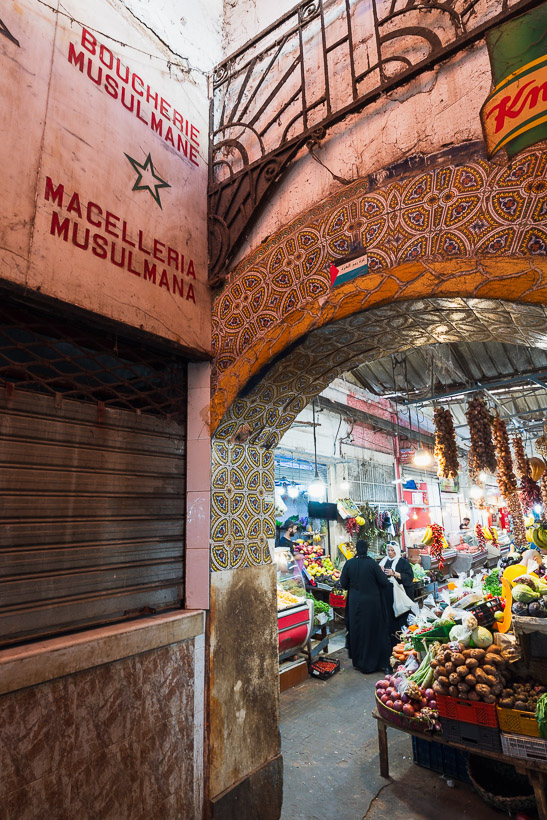
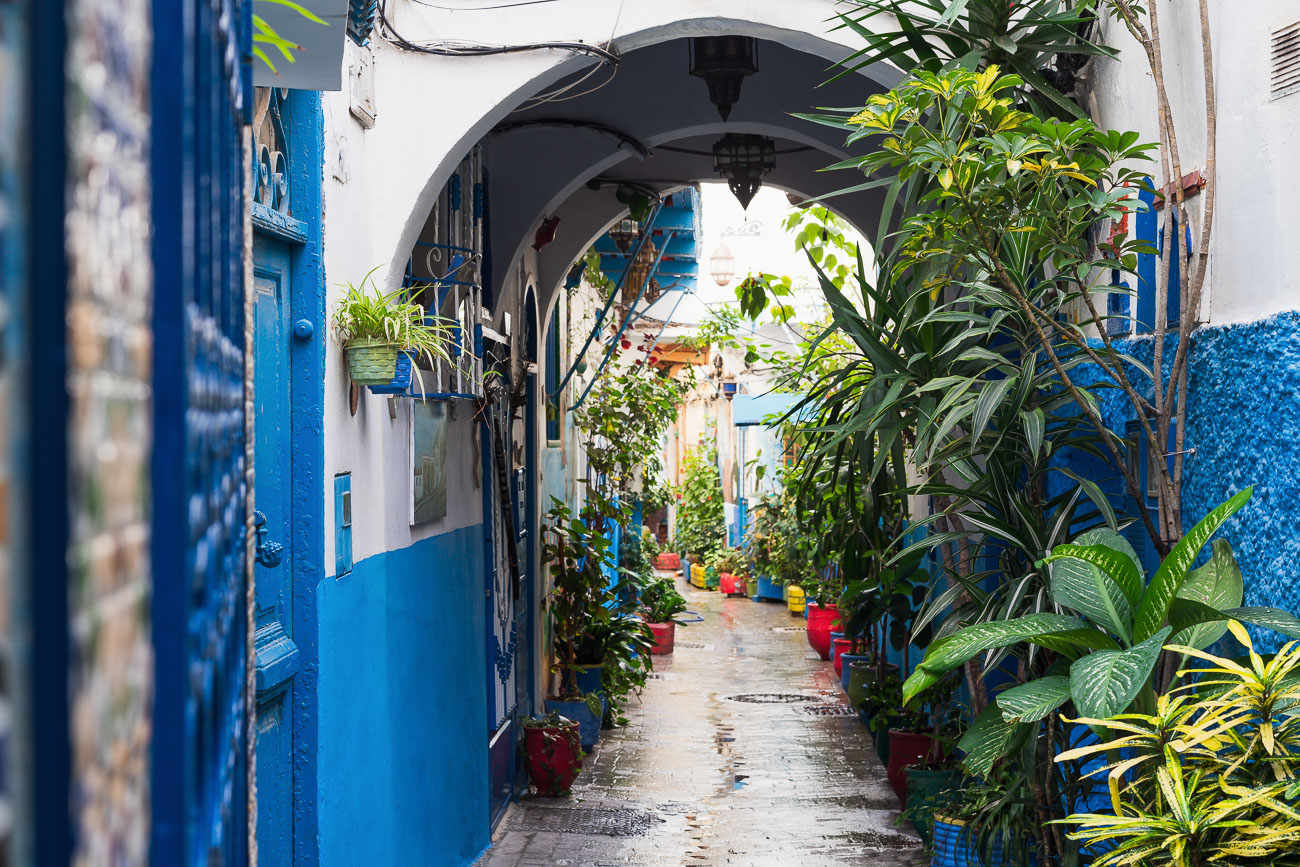
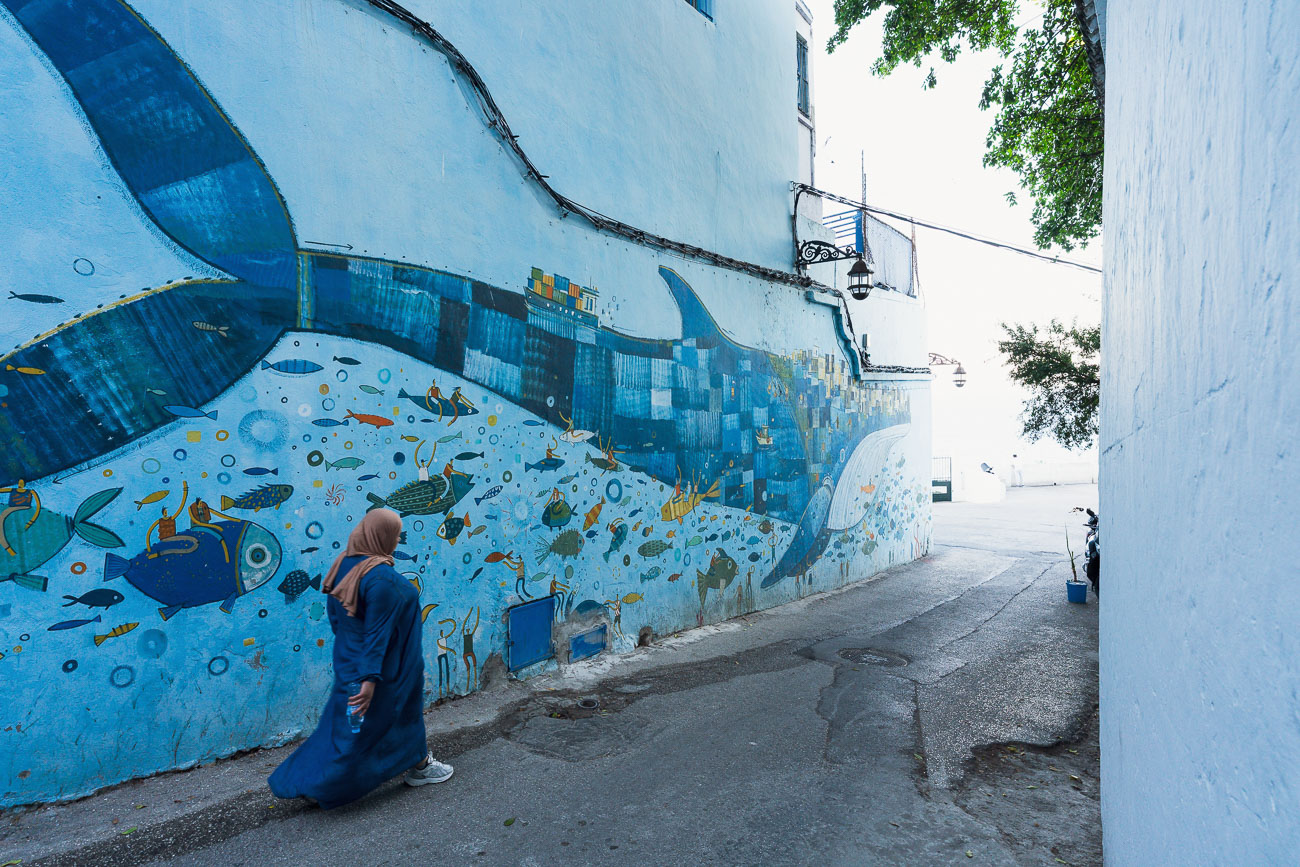
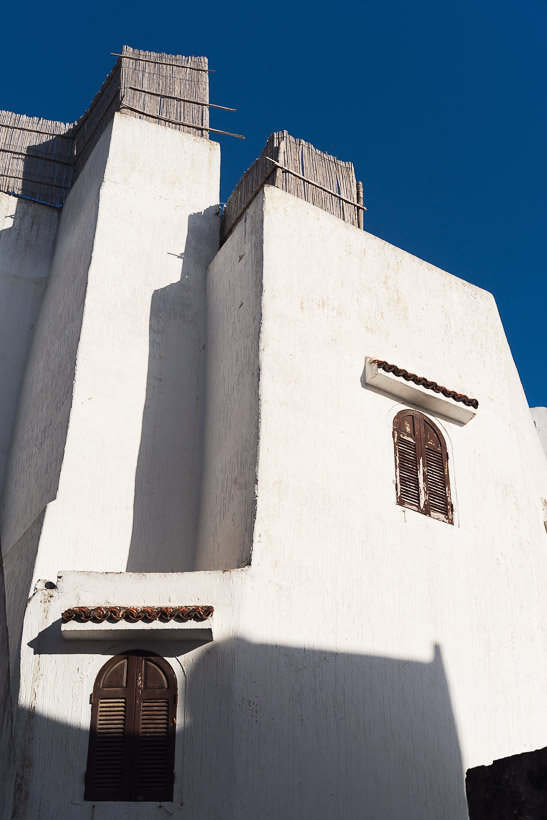
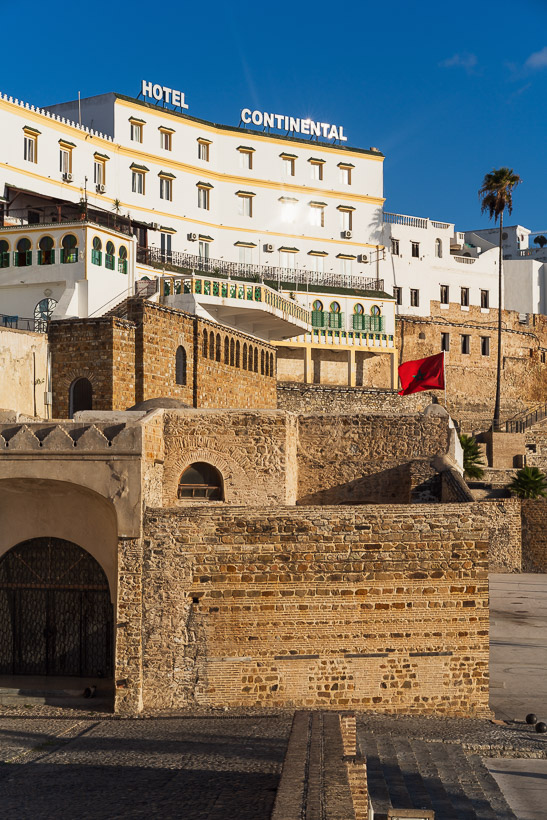
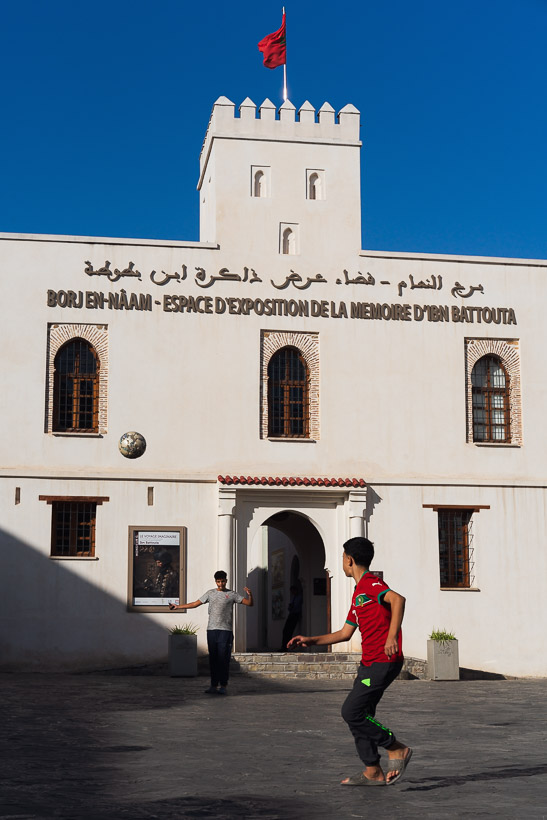
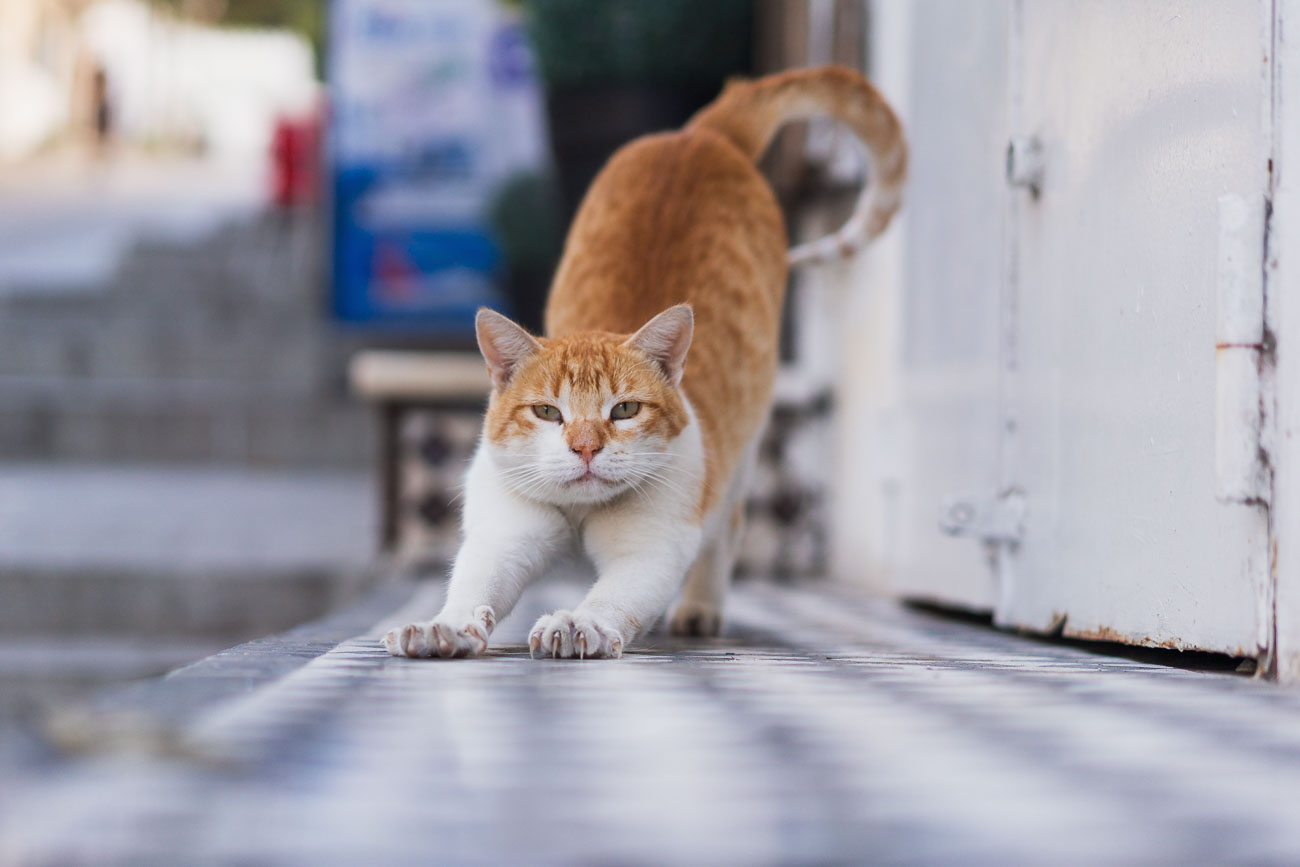
There were plenty of cats around too, but more on those later.
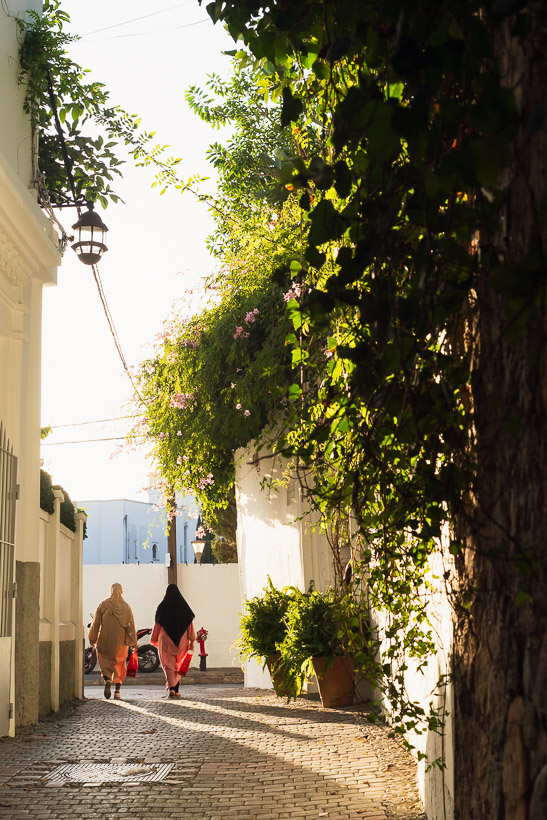
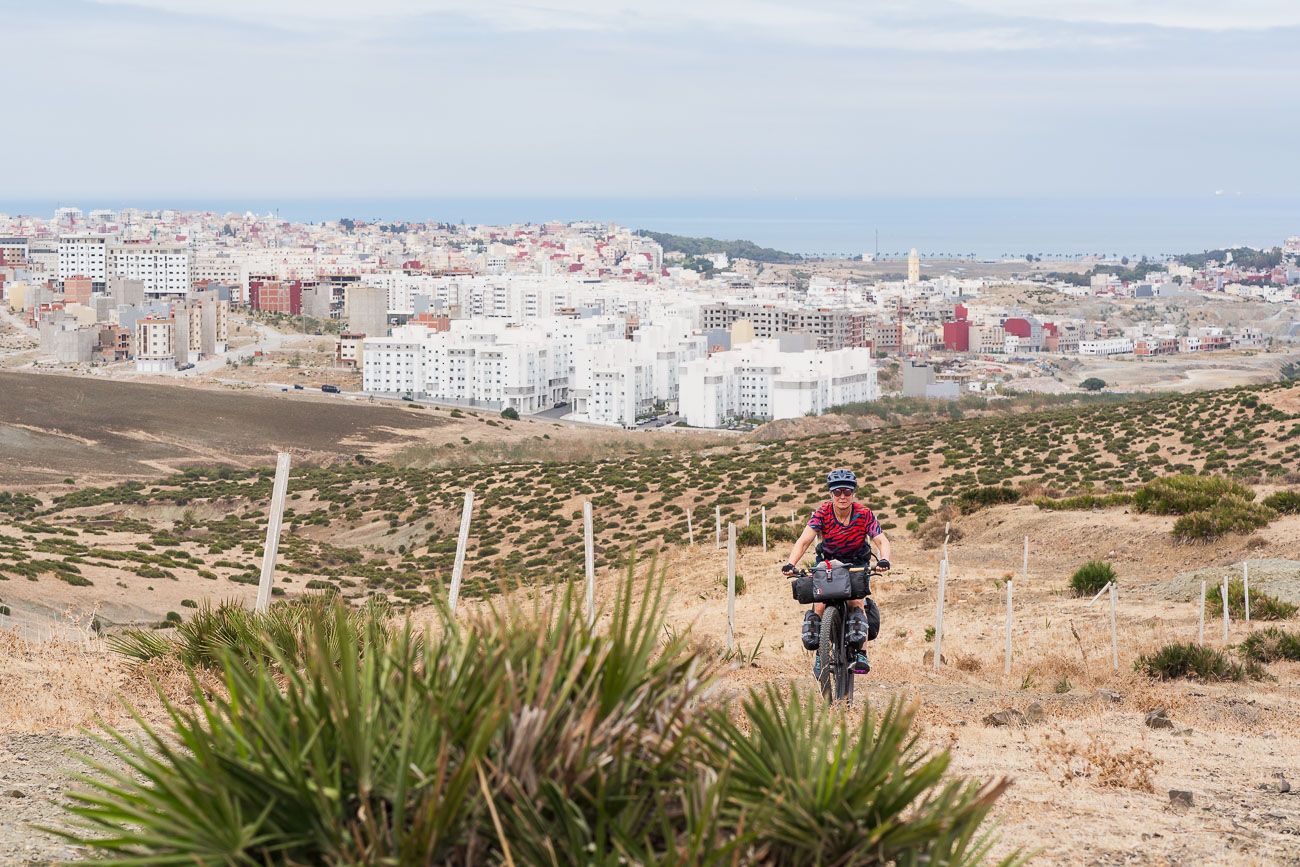
The hot weather we arrived to continued as we left, four days later, finally getting out of Tangier around lunchtime. There’s quite a sprawl of more recent apartment development on the margin of the city, but once through that we were quite suddenly on rough dirt tracks climbing into the hills.
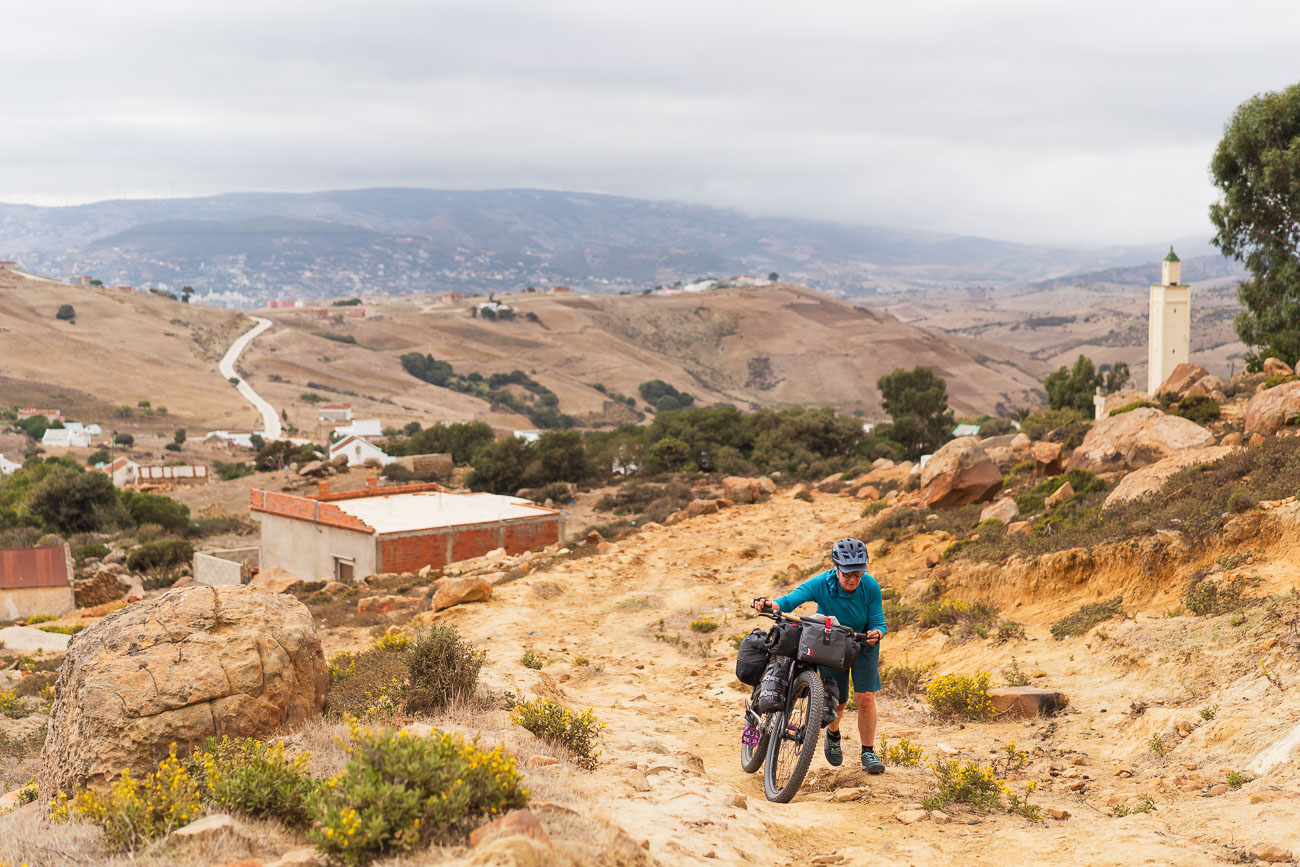
For the first two to three days Route of Caravans links up quiet back roads (quite often paved) with sections of dirt road, making for a peaceful route that passes through frequent small villages. It seems that some of the route wasn’t ‘ground truthed’ after being planned though so there was the odd strangely contrived section of dirt (like this) avoiding a perfectly good (and quiet) road 50-100 metres away that went to the same place.
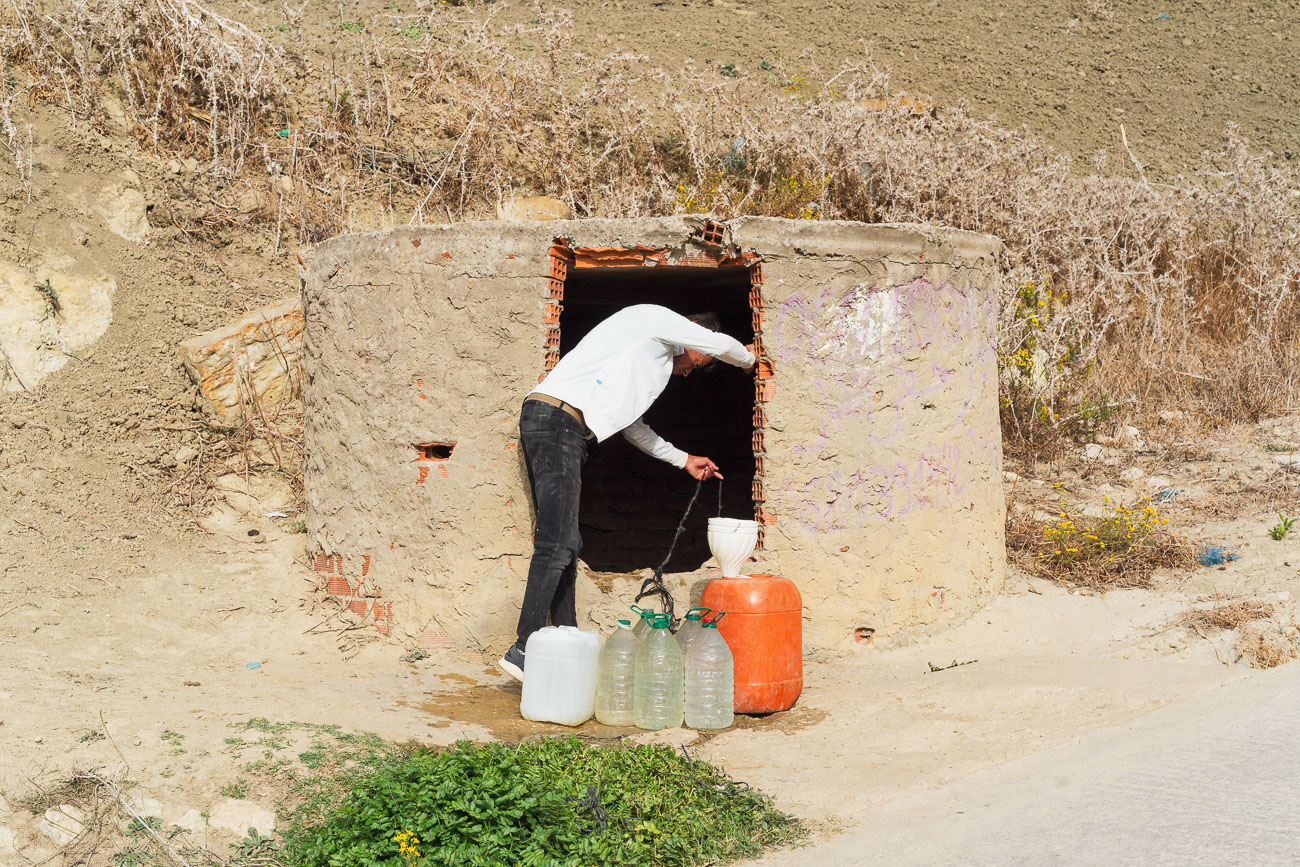
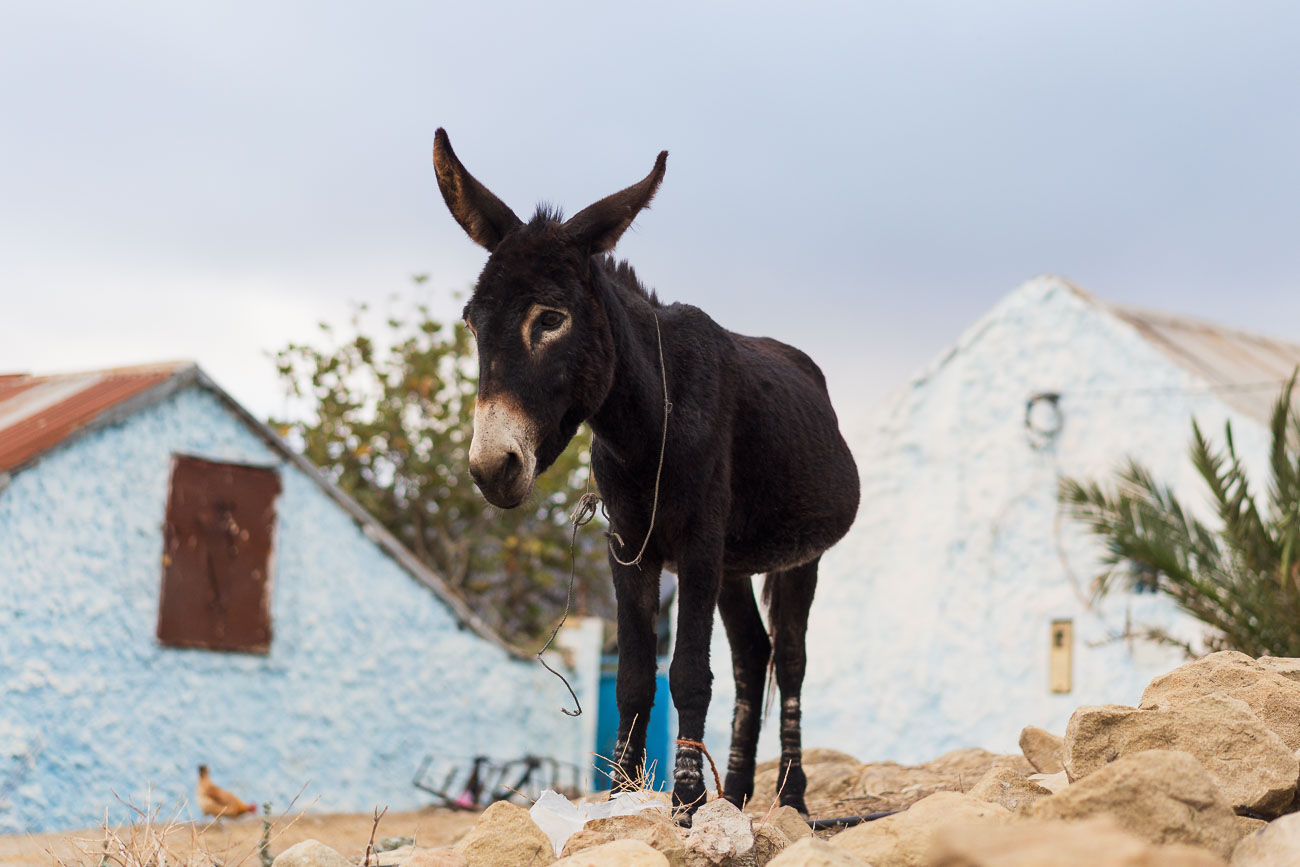
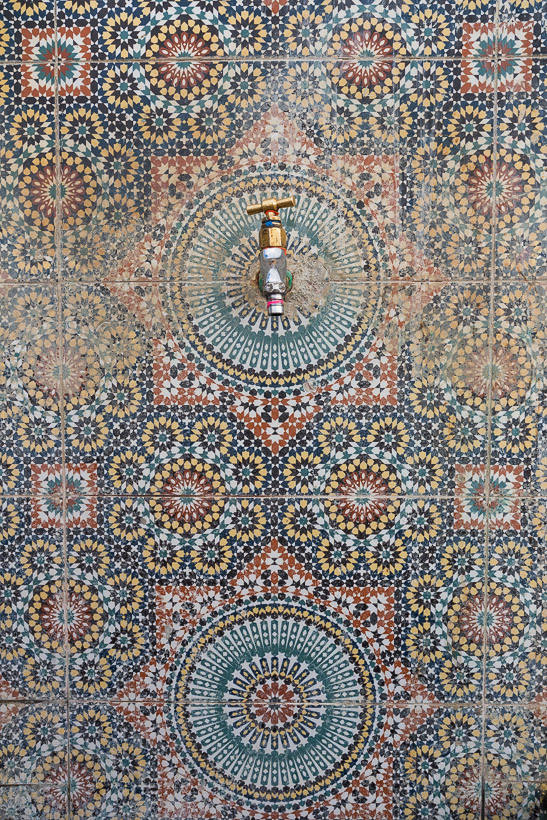
We left Tangier quite well stocked with food, having shopped at the Carrefour in the city for oats, milk powder, granola bars and dinner for the first night or two. But once we were out in the wild we realised we didn’t even know the local word for bread (khobz), or anything else very useful, though with food being so essential to riding a bike everyday we soon picked up the key words. What was easy to work out was where to get water. It seems many homes don’t have running water, and with no (or very little) groundwater to collect, the locals were as reliant on the bores, wells and communal fountains (saqaya) as we were.
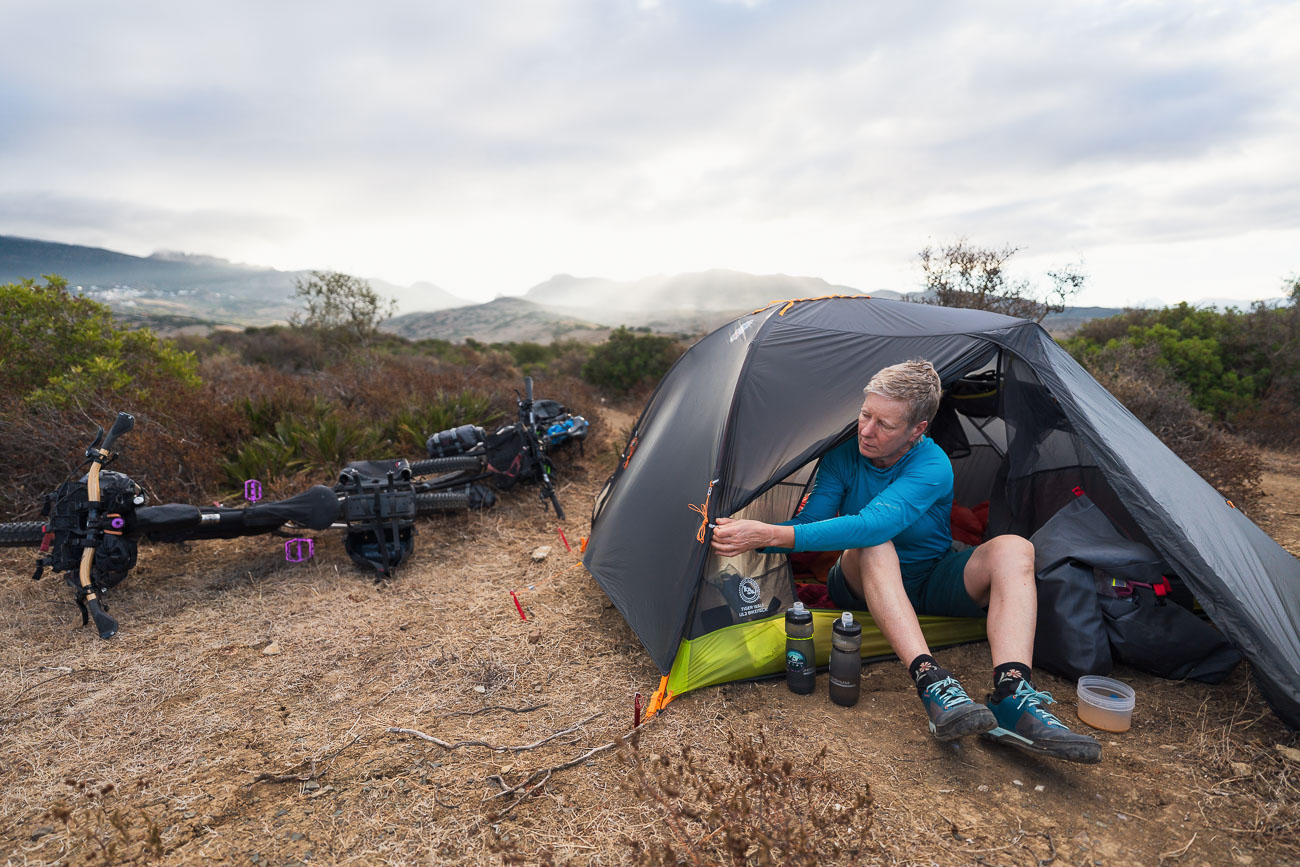
Riding for so long in Latin America we became used to generally abundant wild camping, cheap hospedajes and sometimes campgrounds. Morocco was quite different. For much of the northern half of Route of Caravans it can be hard to find wild camping spots that are out of sight of the road, or dwellings. They do exist, but tend to require a bit of forethought or satellite map studying, rather than luck. Hotel or backpacker accommodation seemed to be rare too, outside of the tourist centres. Once you’re in the High Atlas, or on the tourist trail of the Anti Atlas there are gites (hostels, usually with meals), which we occasionally made use of, but they often weren’t particularly cheap.
For our first night camping out of Tangier we rode til dusk and hiked our bikes into the middle of a large patch of scrub that we’d seen on the satellite map. It was the only place we could find that didn’t look too public and the only large ‘green’ area we could find. As it was, a goat herder came through with her flock just after we set the tent up. She looked at us like she’d never seen anyone camping there before – and then seemed to gesture for us to follow her, but we politely declined, being both already set up and knackered from the day’s heat and steep roads.
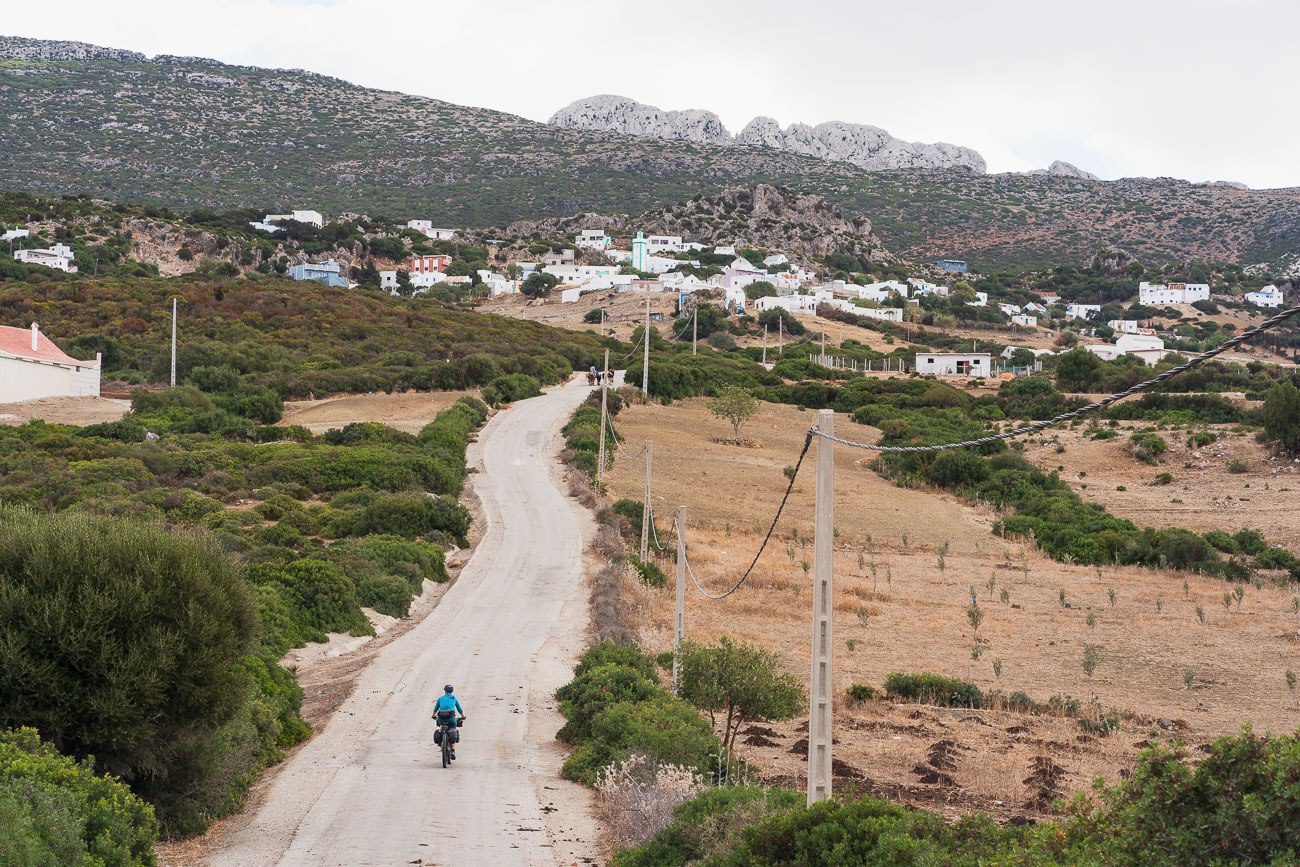
Day two was similar to the first, with intermittent paved roads, bits of dirt and frequent villages. The highlight of both days was when the road undulated along high ridges dotted with little settlements.
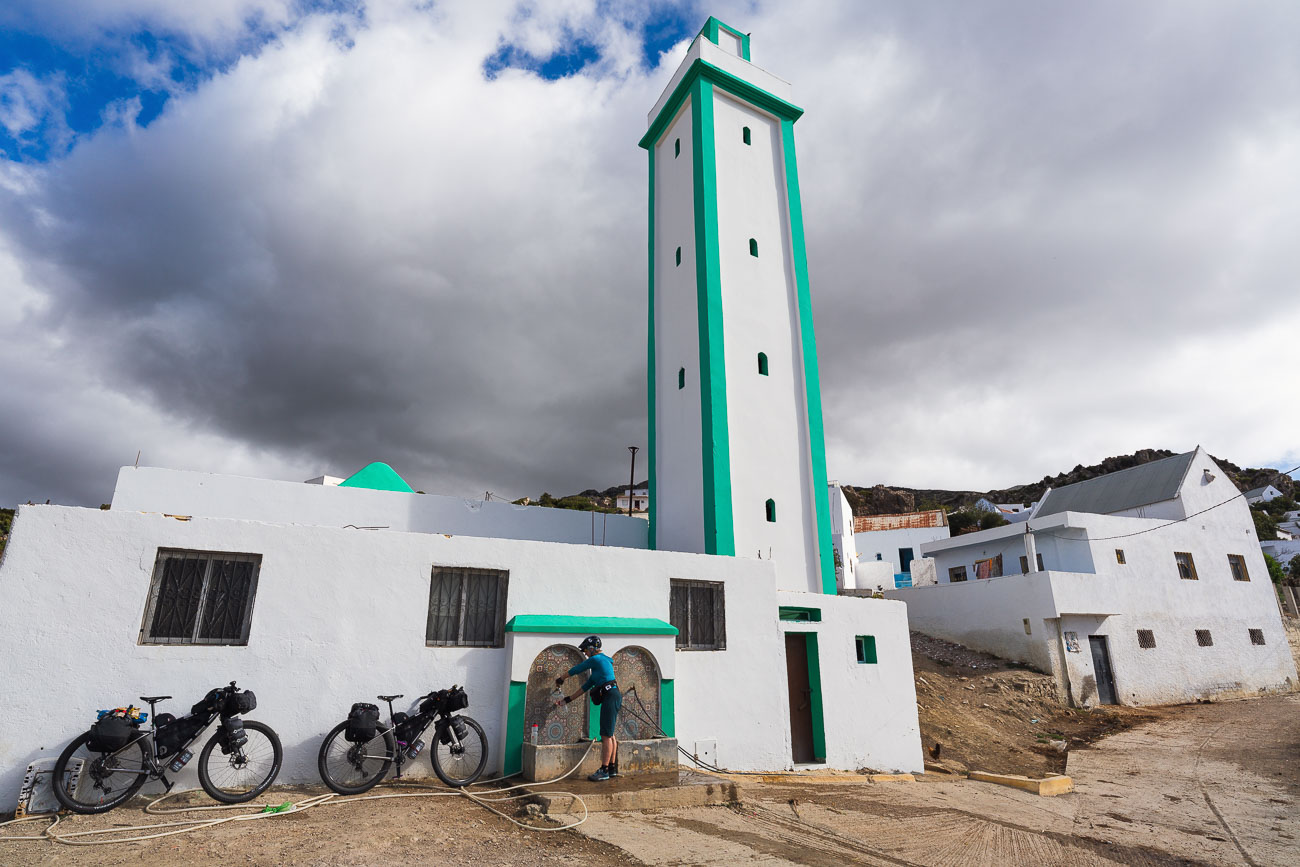
No matter how forlorn some of the villages looked, there was always a mosque – often newish or still under construction. Water facilities were universally an ongoing project too, with some saqaya working well, while others were not piped.
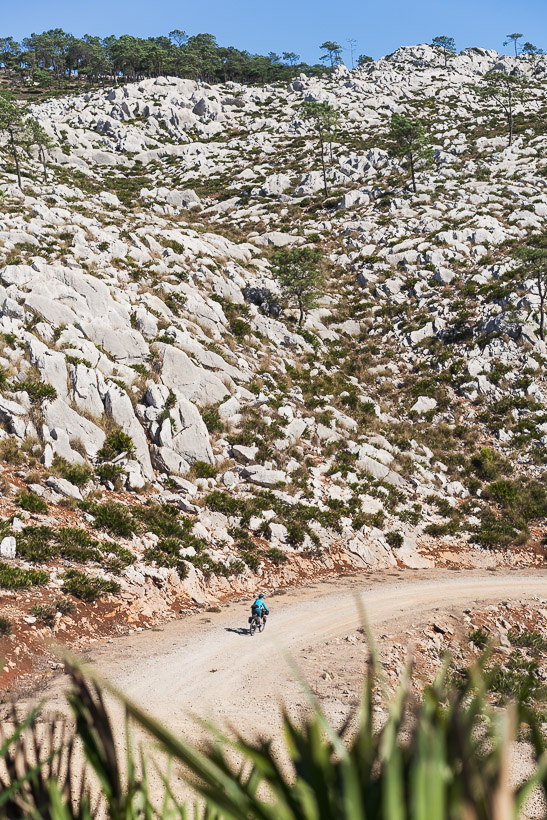
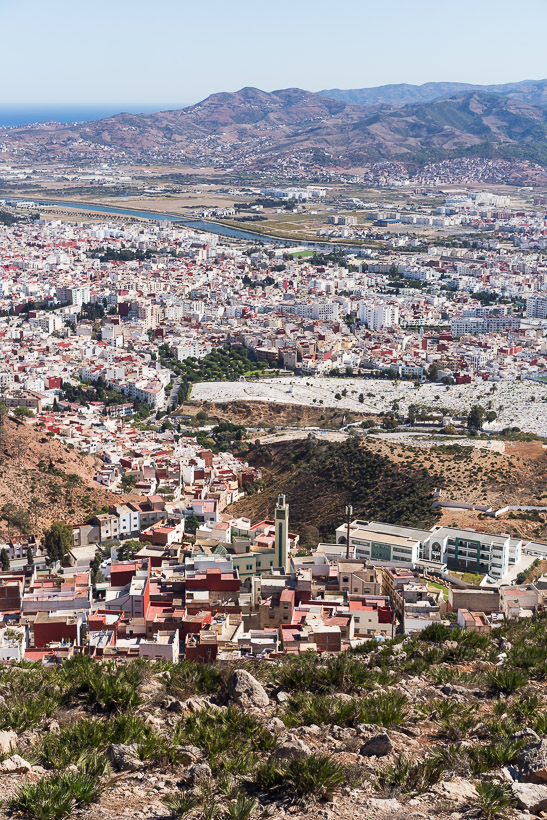
Before lunch we climbed onto a high limestone plateau, passing a sprawling concrete factory as we turned on to a quiet dirt track. This led through pockets of pine forest with lots of rock outcrops and interesting vegetation as we sidled along a range high above the city of Tetouan, with views of the mountains to the south east that the route continues into.
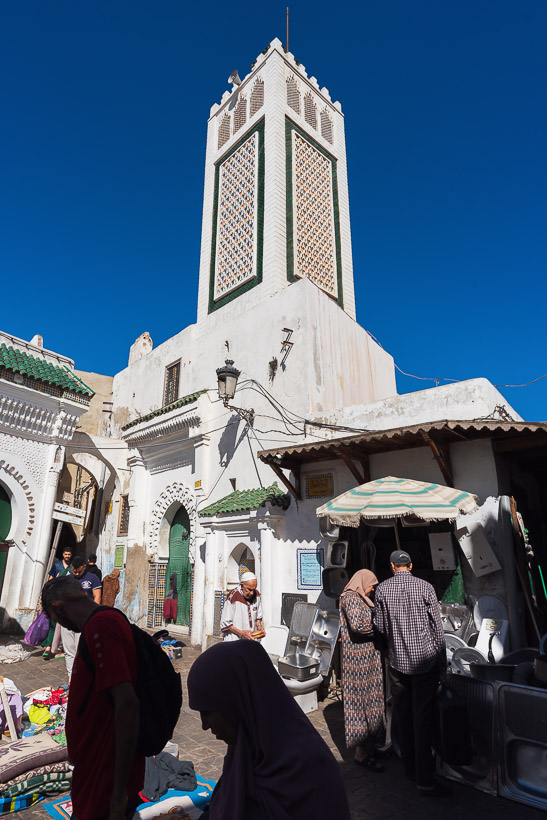
After passing a panoramic viewpoint the road plunged down towards the city, into increasingly narrow streets and tight twists and turns until we realised we were riding – actually walking by now – straight into the city’s main souk (market). This souk is known for its Andalusian influence, as it was one of the key trade links between Africa and Spain. It was so hectic inside we barely stopped to take photos, as we ushered our bikes through crowds of people and endless stalls inside a medina with architecture that’s changed little in hundreds of years.
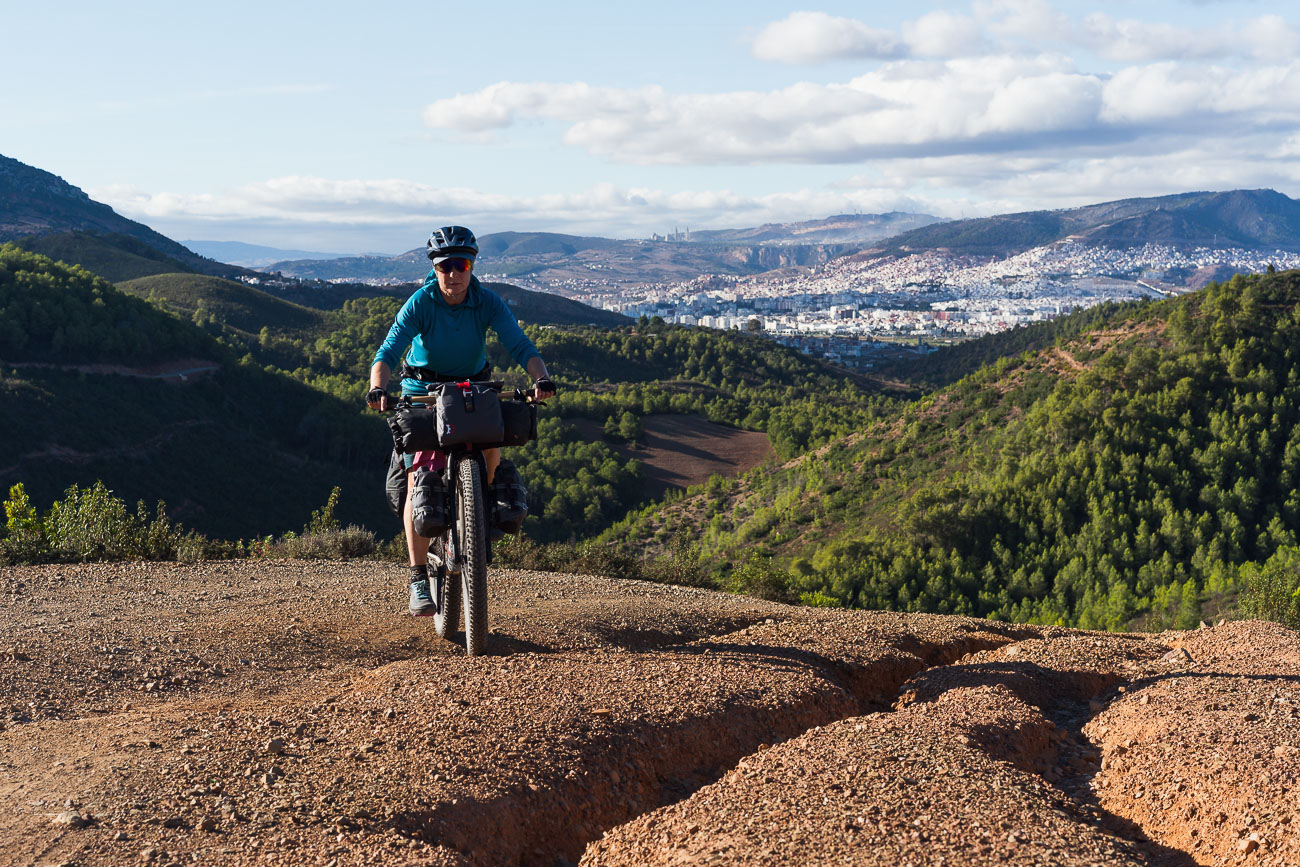
By the time we cleared the confines of the medina, found some lunch and crossed the rest of the city, it was a relief to climb into the hills again – even if it was brutally steep for a while.
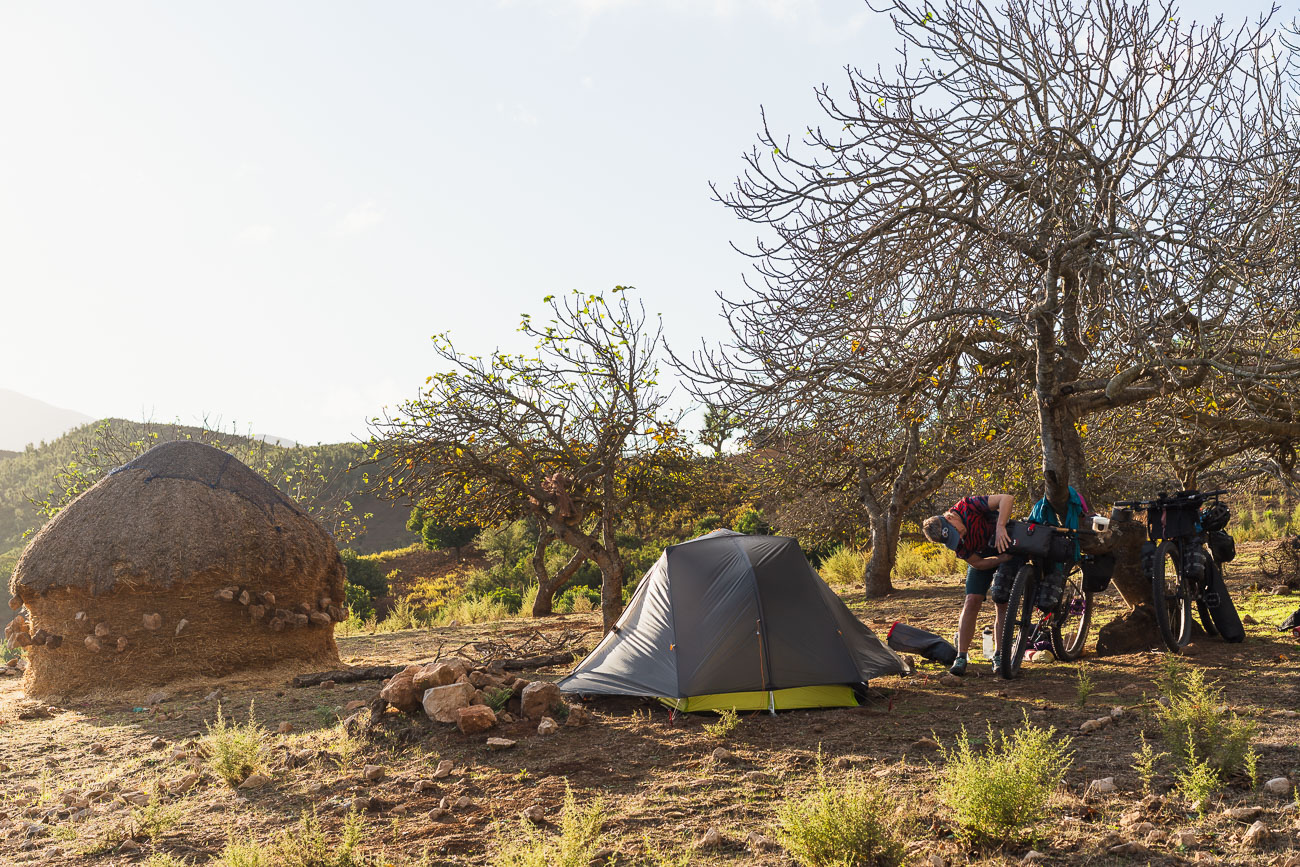
Camp that evening was in a small sloping field, between the road and scrubby cliffs. Picked more out of urgency in the fading light than by planning, despite trying to guess a spot or two in advance. We could have asked to sleep in one of the villages, but being quite smashed from the sudden leap into loaded all-day riding and the heat, and barely able to communicate, we didn’t quite feel ready for an evening of miming and attempted translation.
It was actually a really nice spot to camp, and the lone woman who shepherded her sheep past on dusk didn’t seem bothered by us. We did discover how noisy fig trees can be in the wind though, as their large dry leaves rustle and clash together.
The mound on the left looks like a hut, but it’s a large pile of straw left to dry, while anchored with netting, string and rocks.
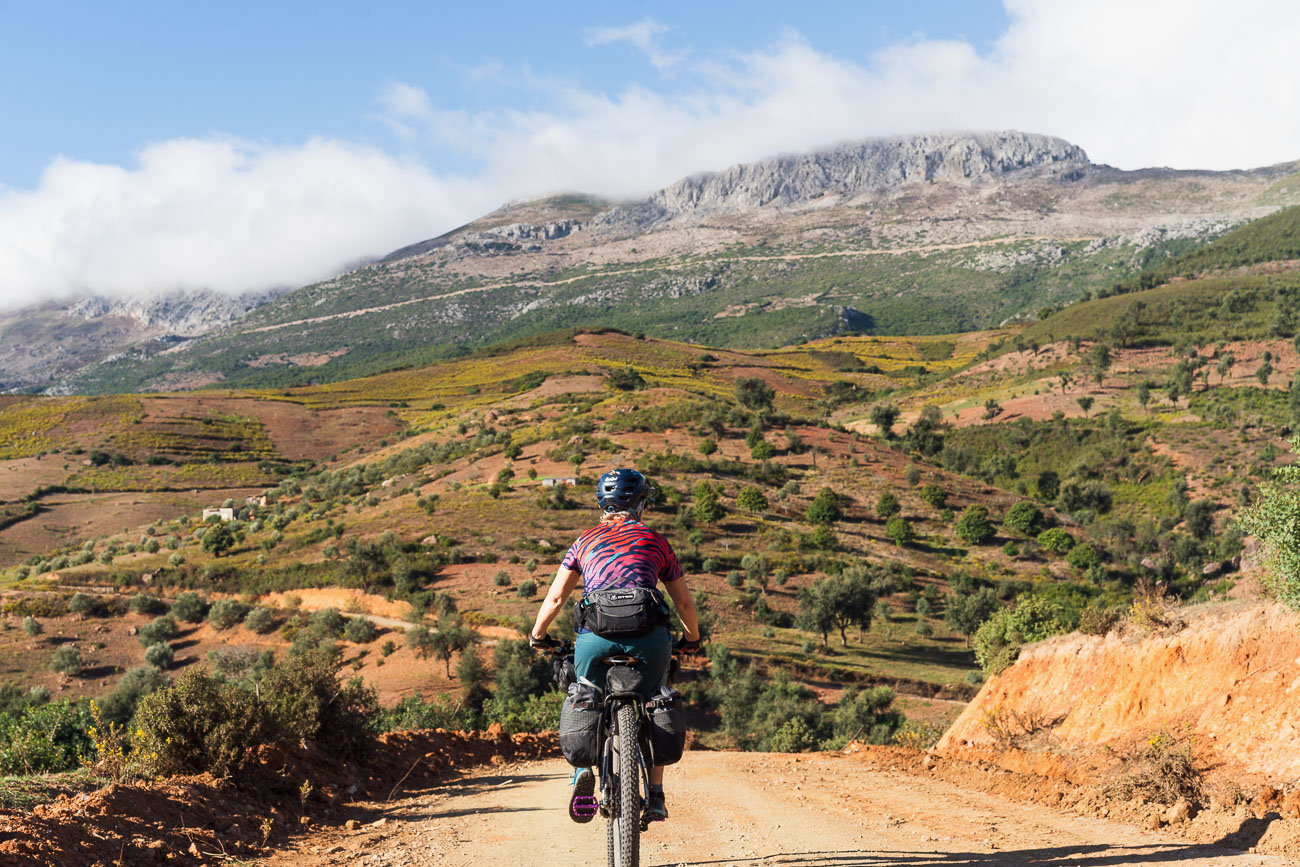
This was the flavour of the scenery for the afternoon of day two and the morning of day three as we gradually climbed into the mountains. I say gradually, but often this height gain consisted of quite steep pitches out of gullies and streams. Hana received a very painful bee sting to the cheek that morning, which began to swell.
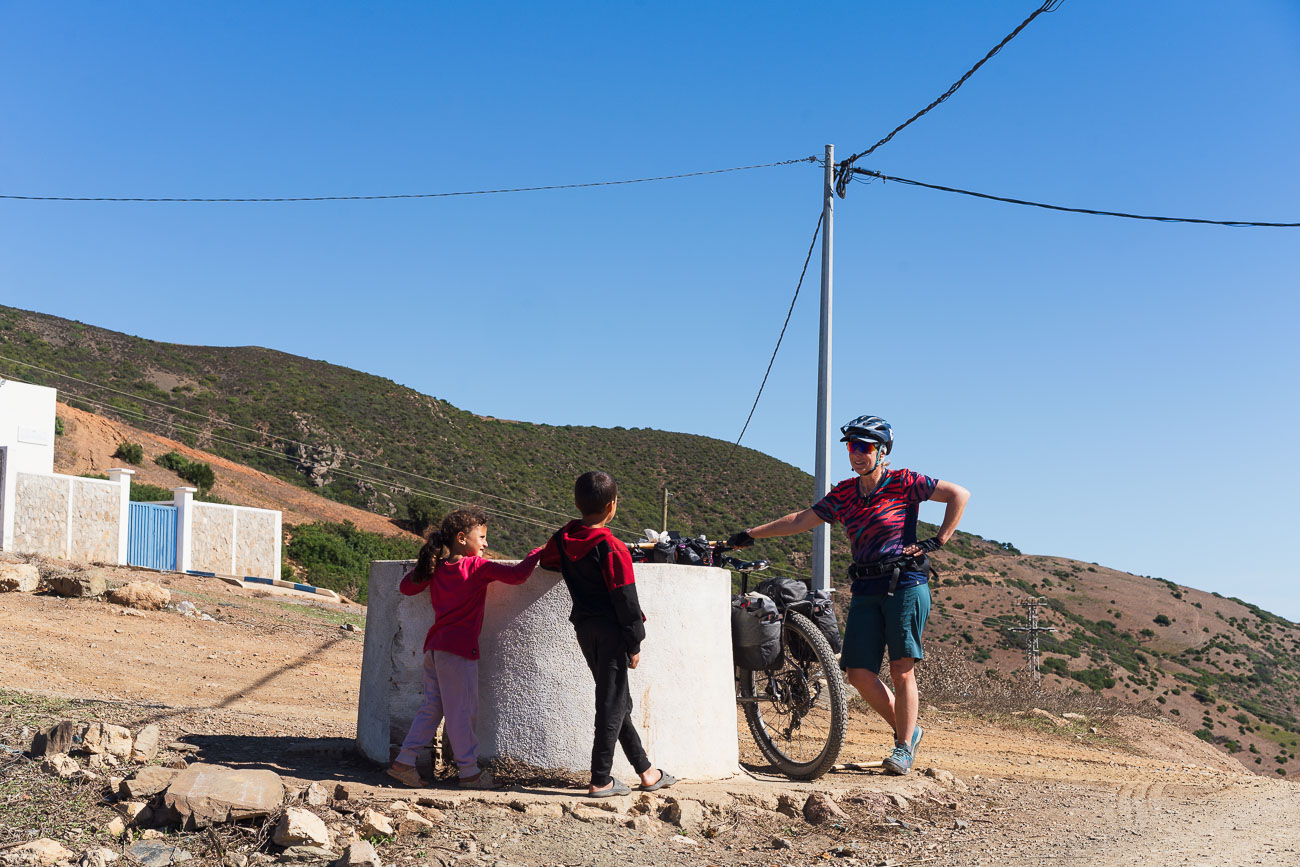
We crossed a pass and made a huge descent into the Oued Laou valley. It was 30°C+ down in the valley, so we chose to wait out the heat of the day in the partial shade of some scrub in a riverbed, before continuing in the cooler afternoon for the climb over into the Oued Laou canyon.
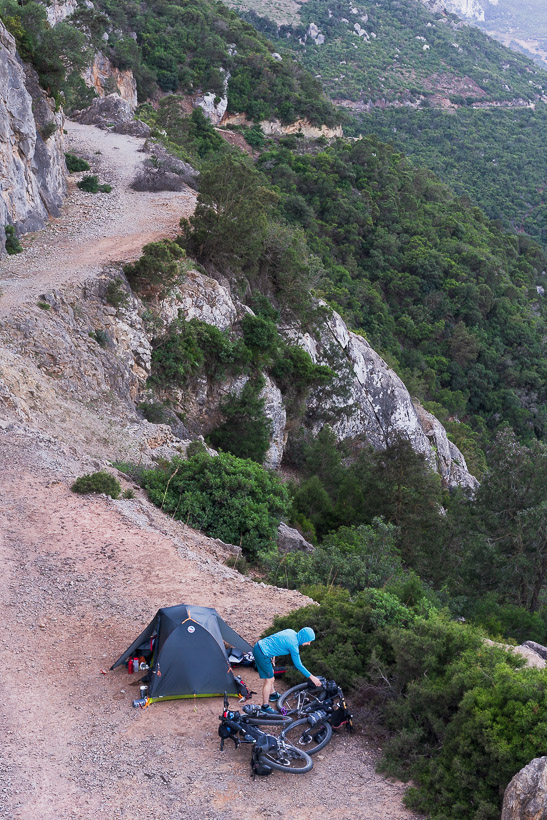
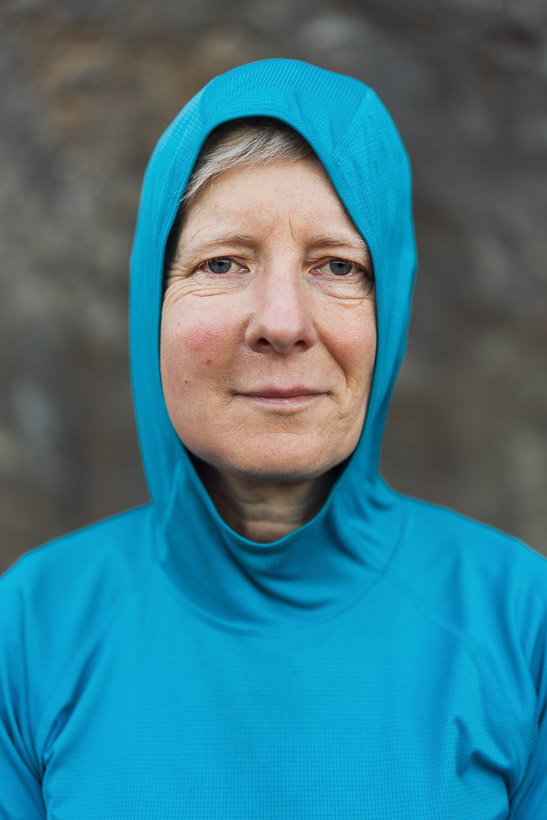
It was a bit cooler in the late afternoon shade of the canyon. There was no one around, except for some shepherd’s huts and little farms way below near the canyon floor, so we set up camp at a scenic spot beside the track. By now Hana’s bee sting had swelled impressively. As the light faded we realised we weren’t as remote as we imagined when the lights of villages began to sparkle upriver and high above on the canyon rim, along with the now familar sight of the solitary bright green light atop each community’s mosque.
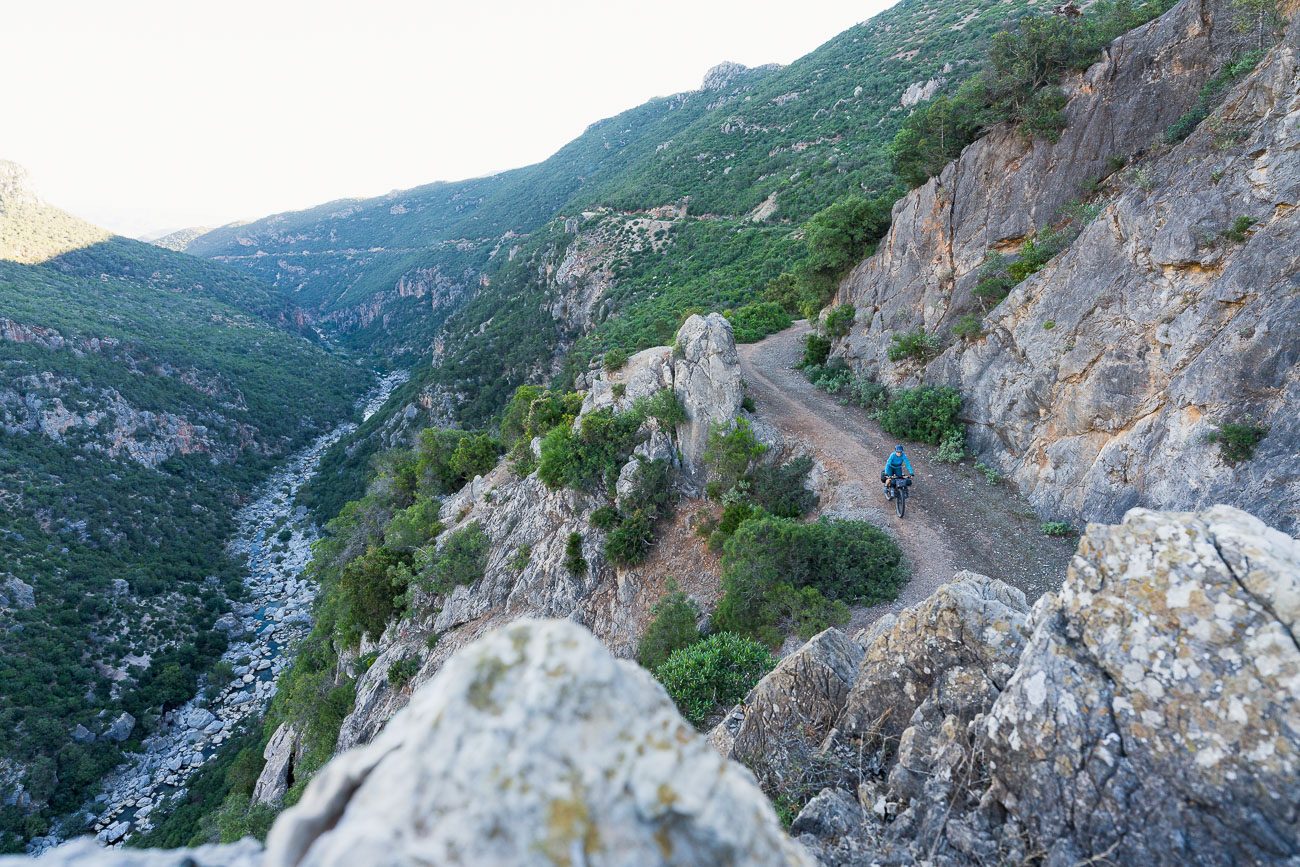
The fun canyon track continued briefly in the morning, until we popped out on a quiet paved road and began gradually climbing towards Chefchaouen.
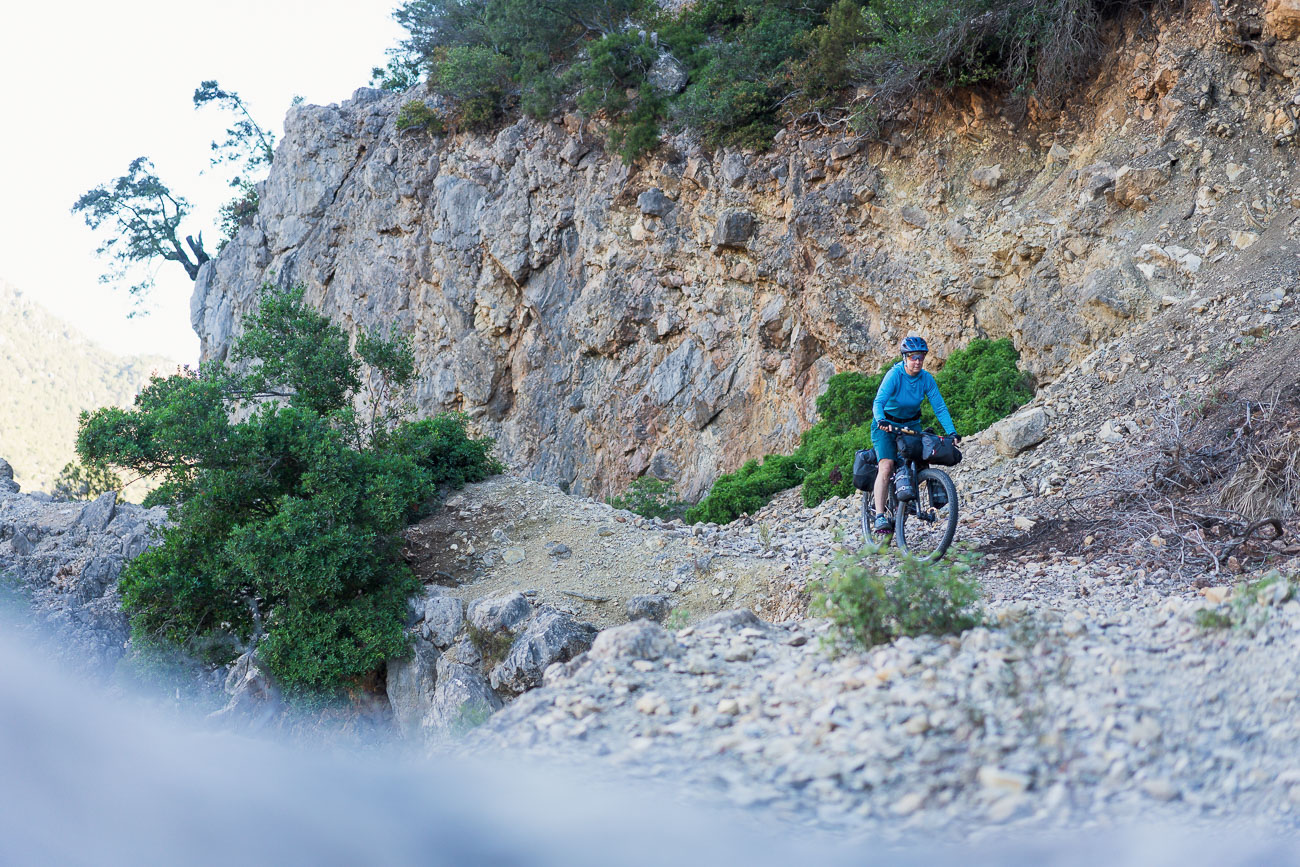
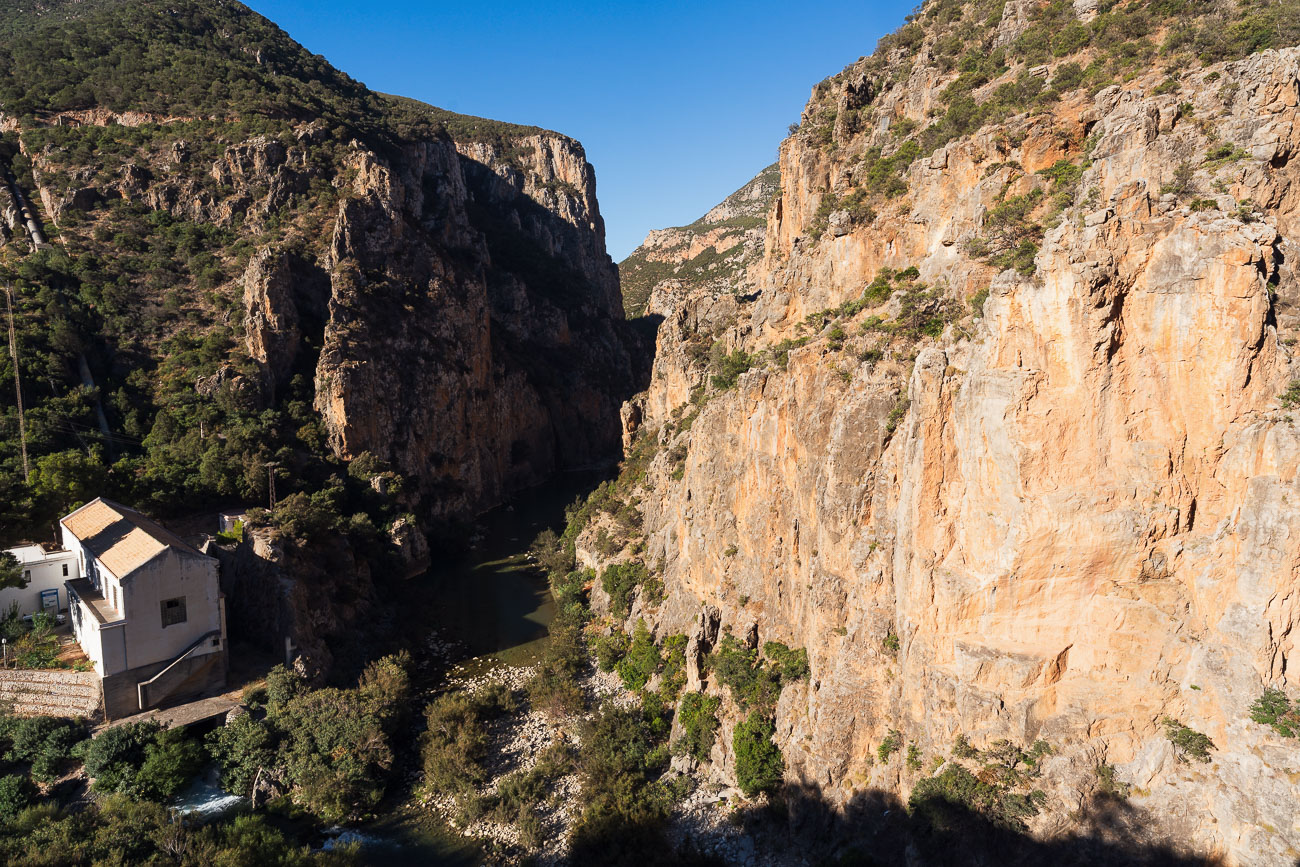
We were on the edge of the Talassemtane National Park, within the Rif Mountains – the first of Morocco’s ranges we’d traverse. The area is well known for its spectacular limestone cliffs and canyons and is popular with climbers and trekkers. We spotted a couple of bolted ‘roadside’ crags as we slowly climbed past the orange walls and small groves of olive trees.
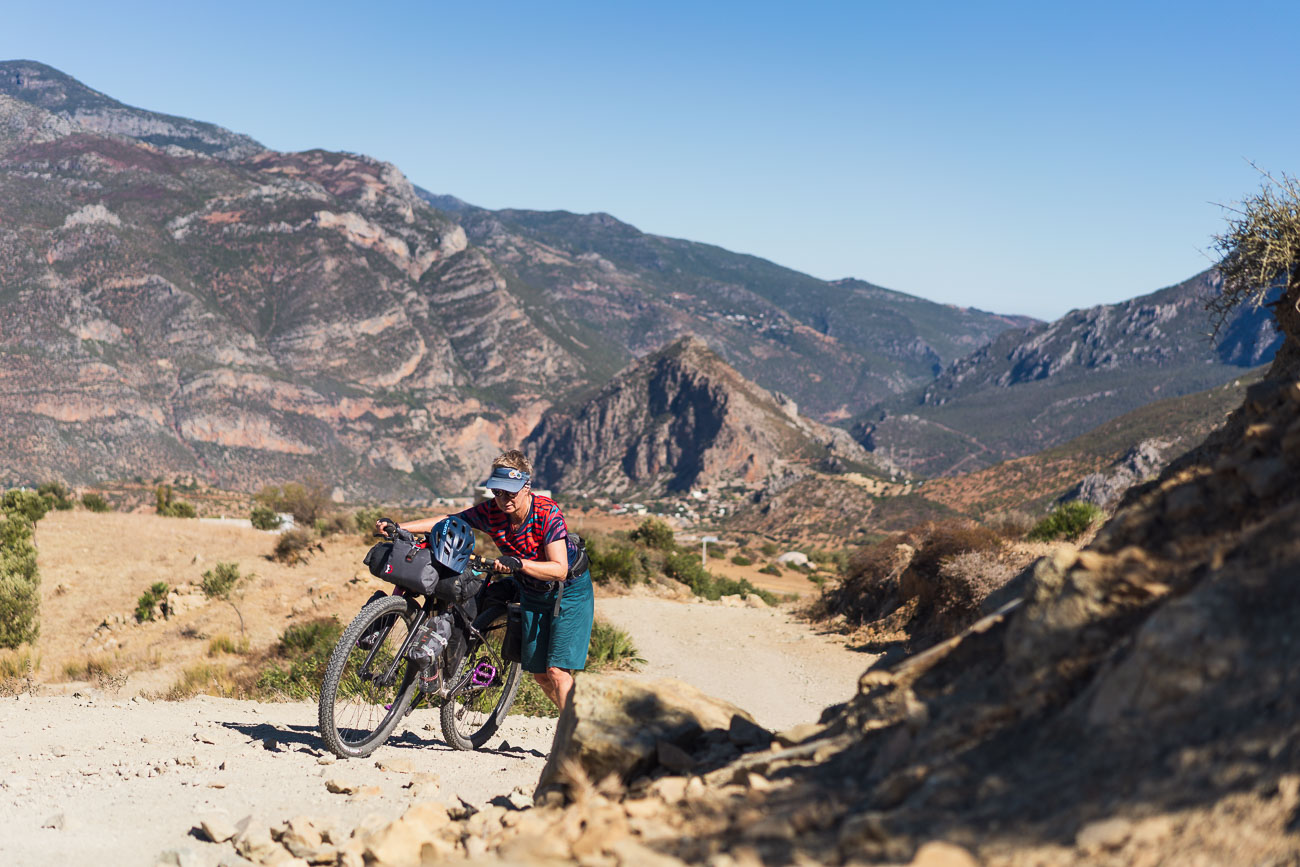
After a stint on the main road, Route of Caravans takes to steep tracks again as we climbed around 1000m through a very hot morning. It was in the 30s again too, and we were both feeling the strain after the previous three days. Hana’s sting was super uncomfortable and we were looking forward to both a break, and checking out Chefchaouen’s legendary blue-washed medina.
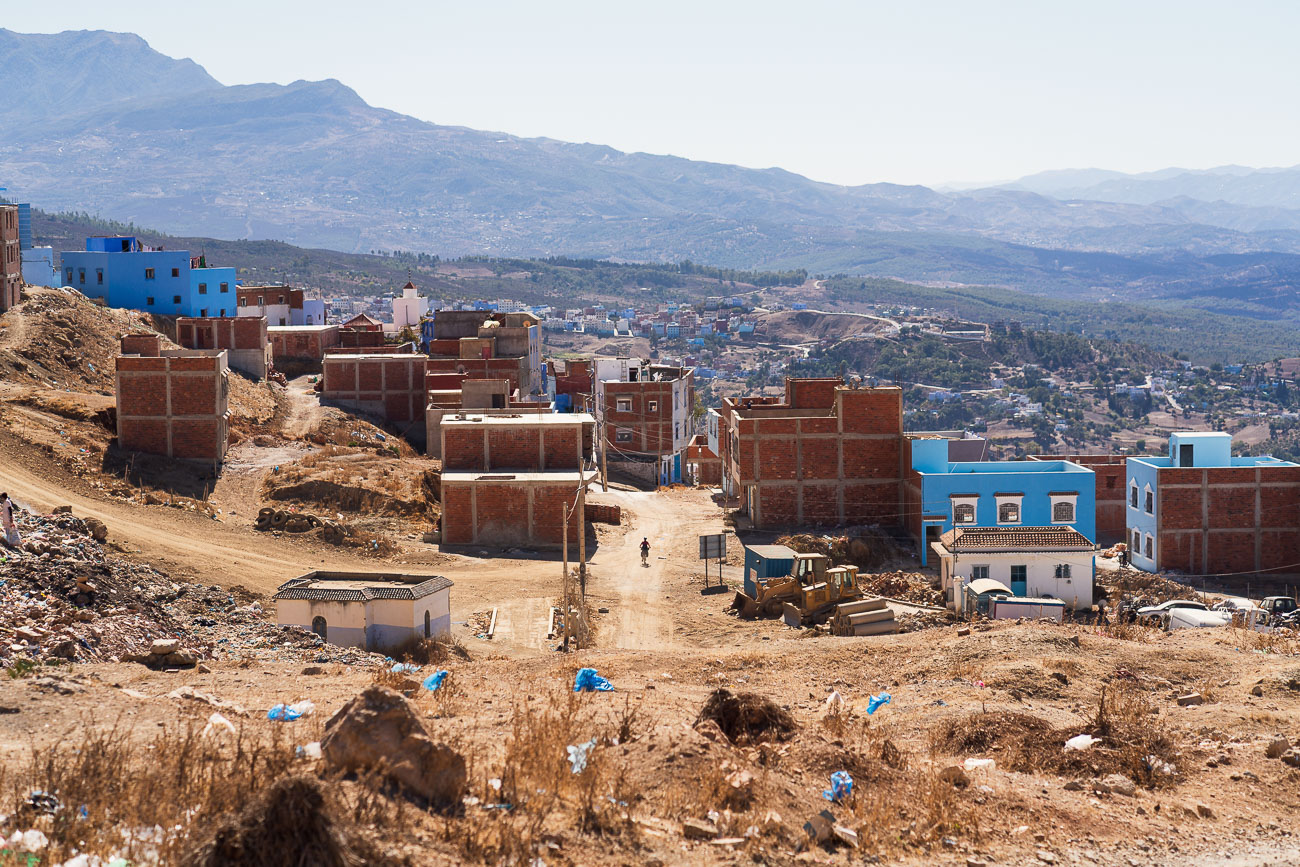
The outskirts of this historic Rif Mountains town weren’t too pretty.
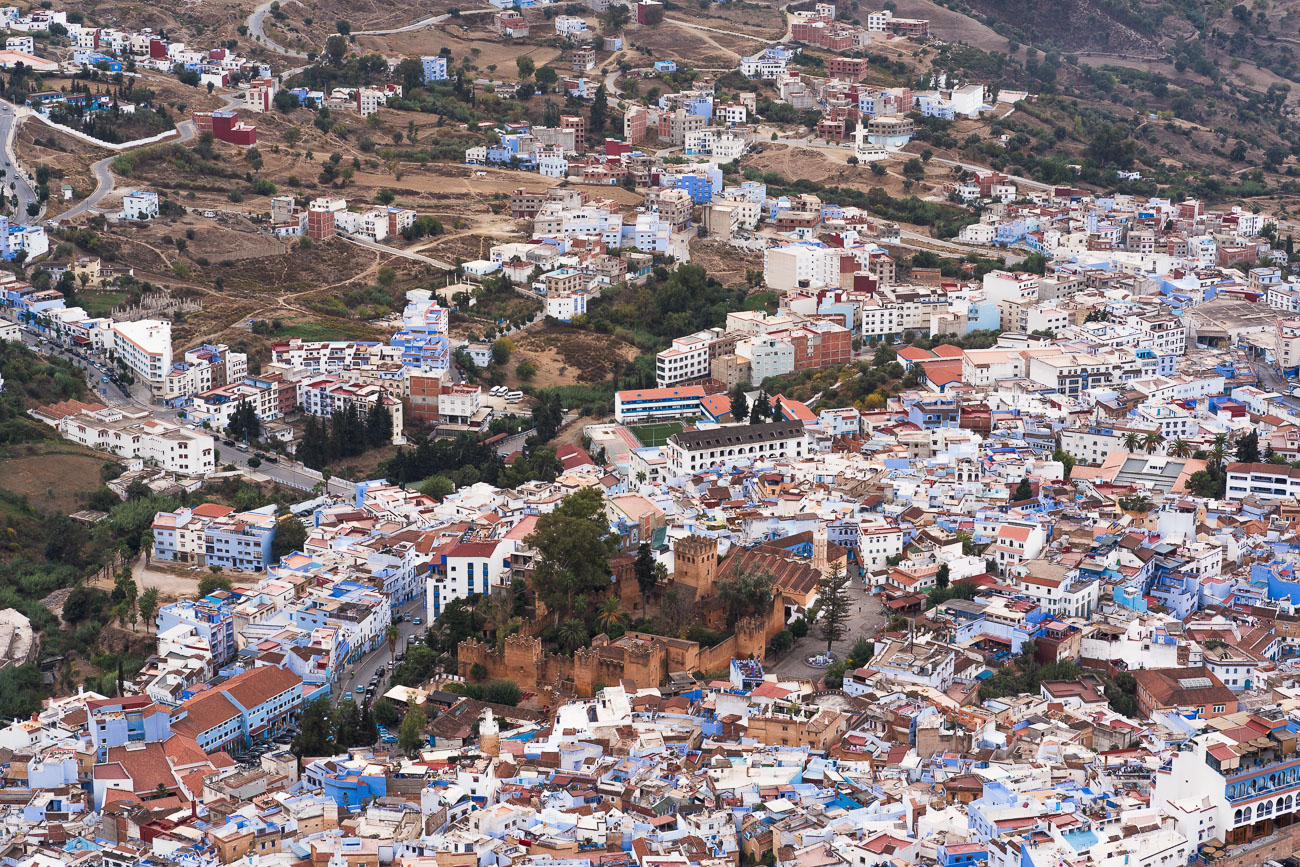
But the centre of town was an impressive sight with its original 15th century citadel, around which the dense and colourful medina of Chefchaouen has grown over the centuries.
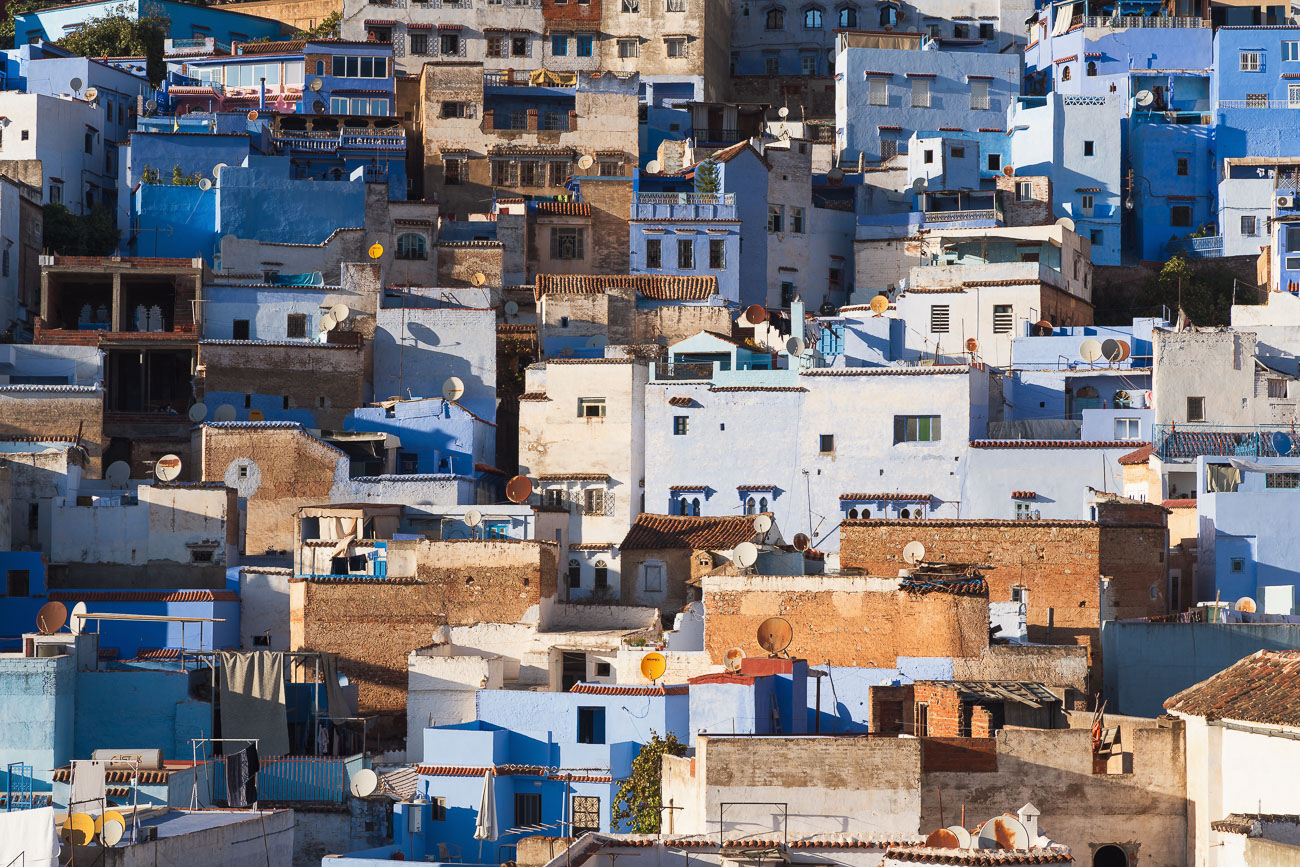
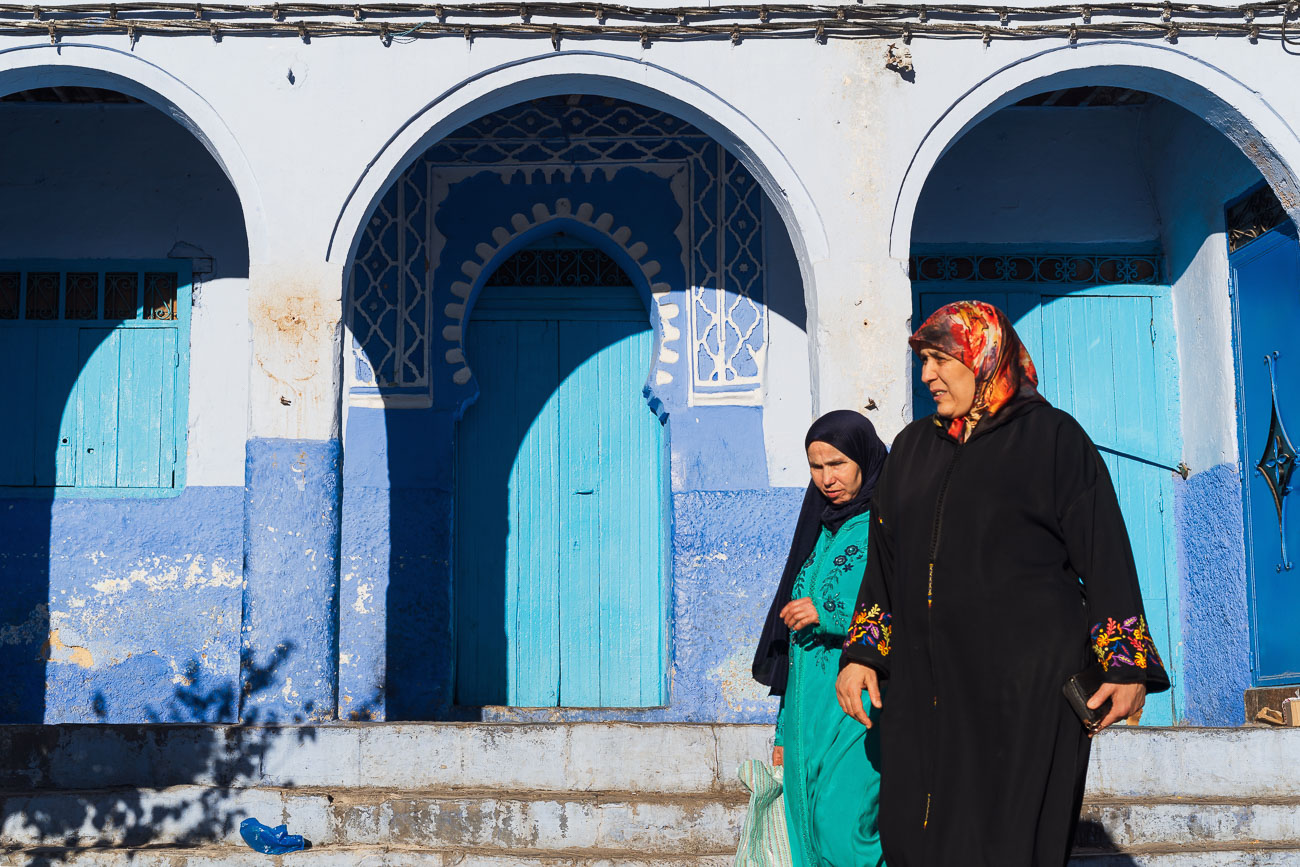
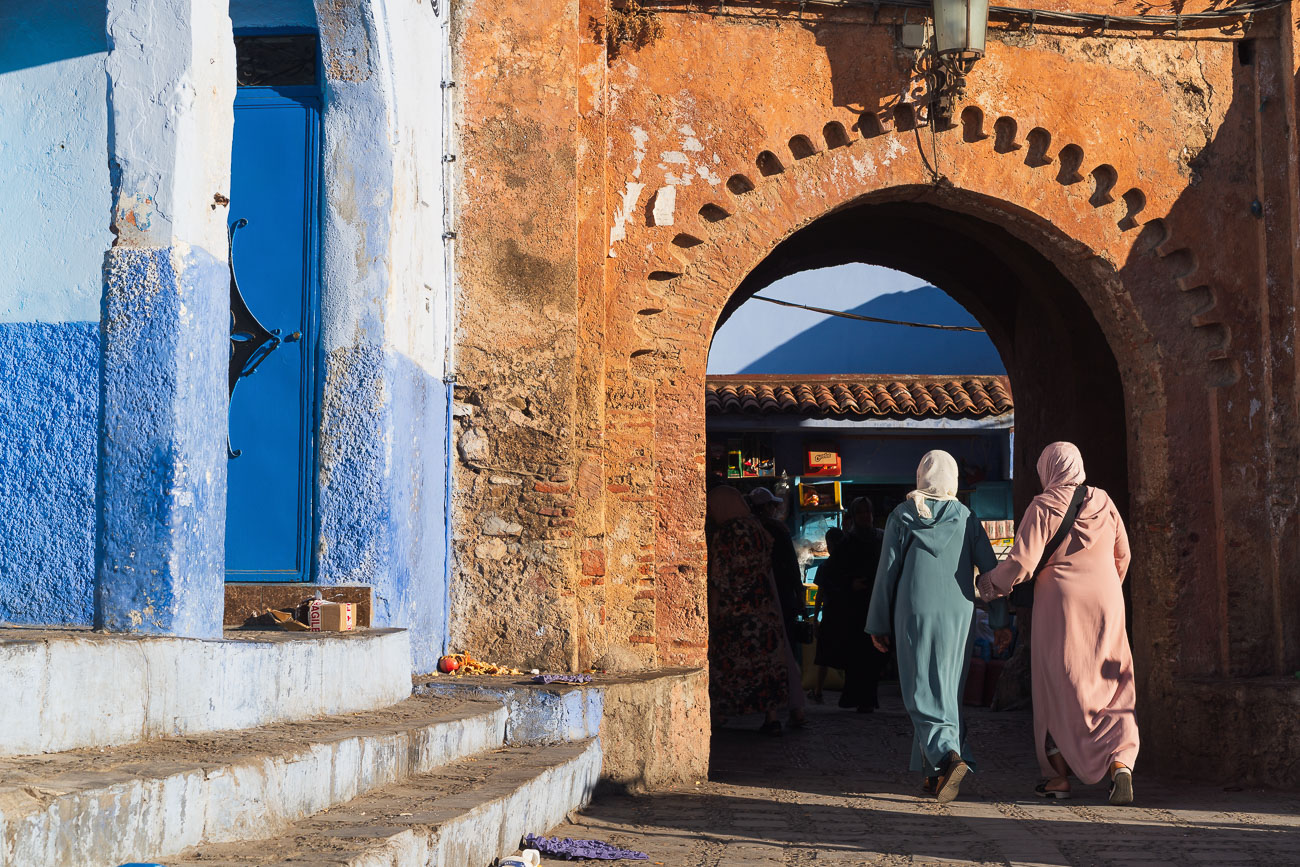
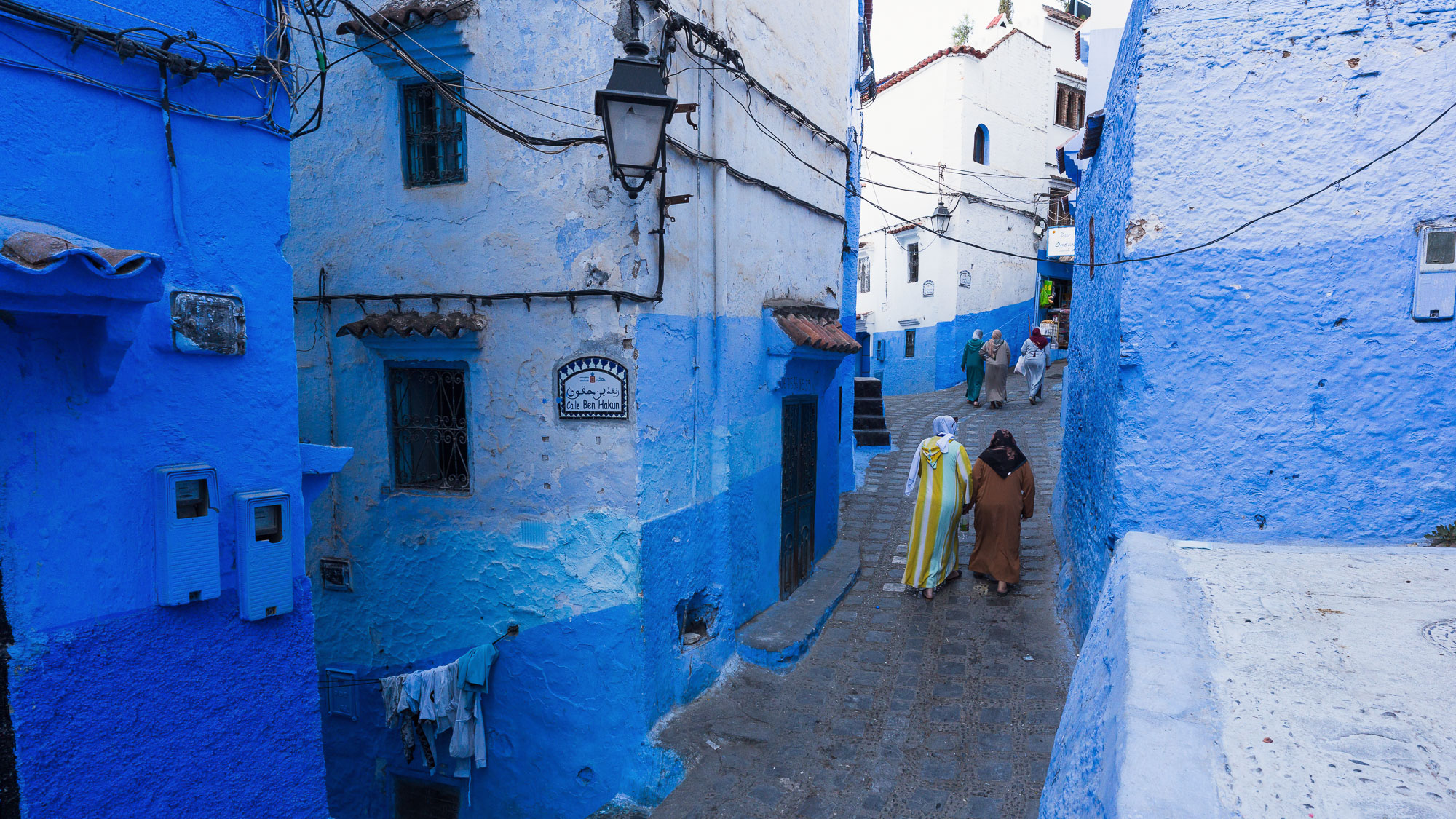
Outside the medina’s walls, Chefchaouen could have been any one of the countless large towns we passed through in Latin America, with its mixture of scruffy unfinished buildings, modern utilities, market chaos, litter and broken footpaths. But once you enter one of several gates into the medina, Chefchaouen is quite unique.
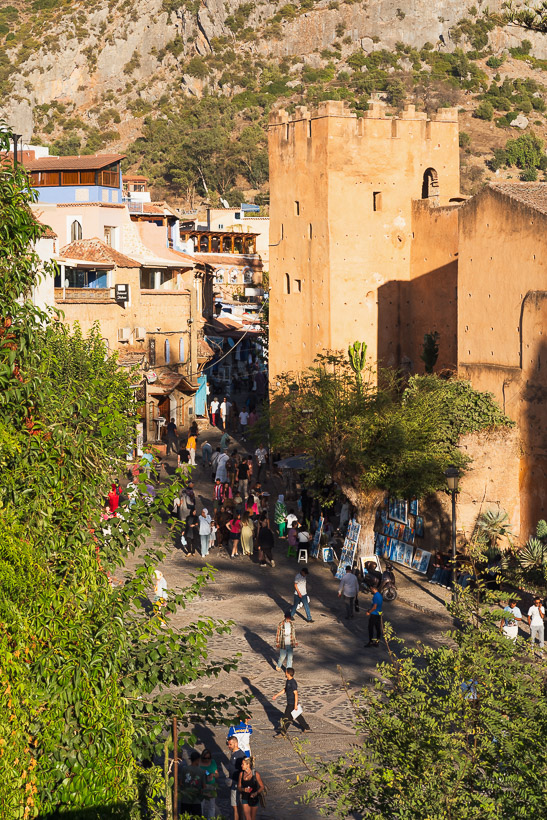
At first, it’s a jostle with other tourists, as well as the locals, on the medina’s arterial alleys, but it’s easy to find quiet by ducking down the numerous corridors, through arches or following time-worn stairways to hidden courtyards. Sometimes the alleys dead end at an apartment door, or you can quickly become completely disoriented – popping back out onto a busy footpath that you don’t recognise.
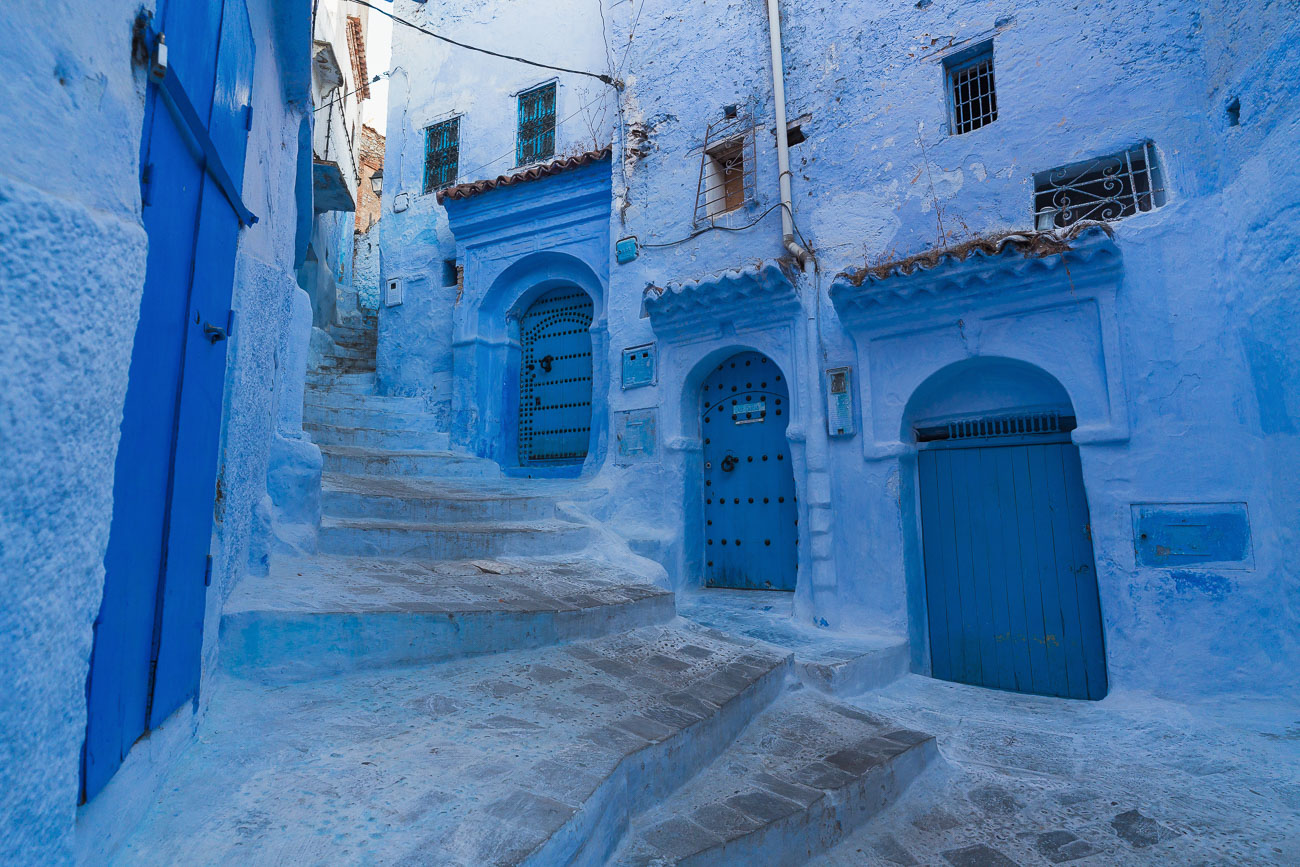
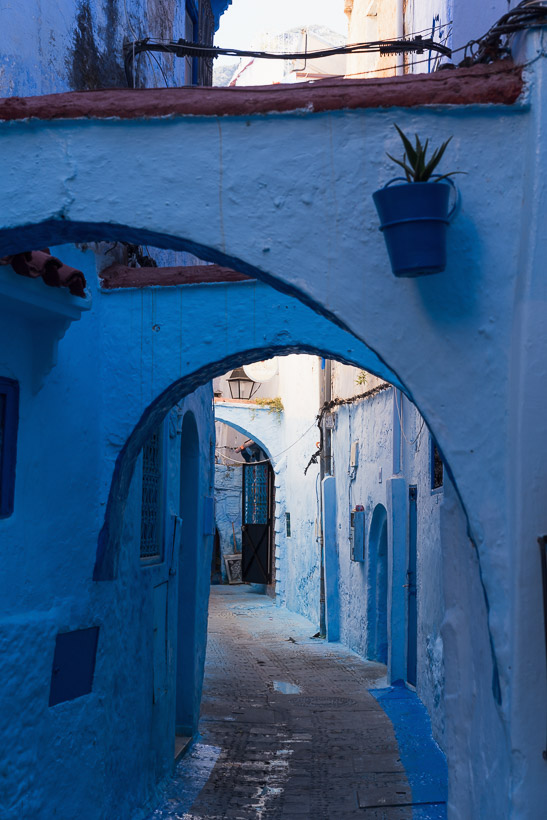
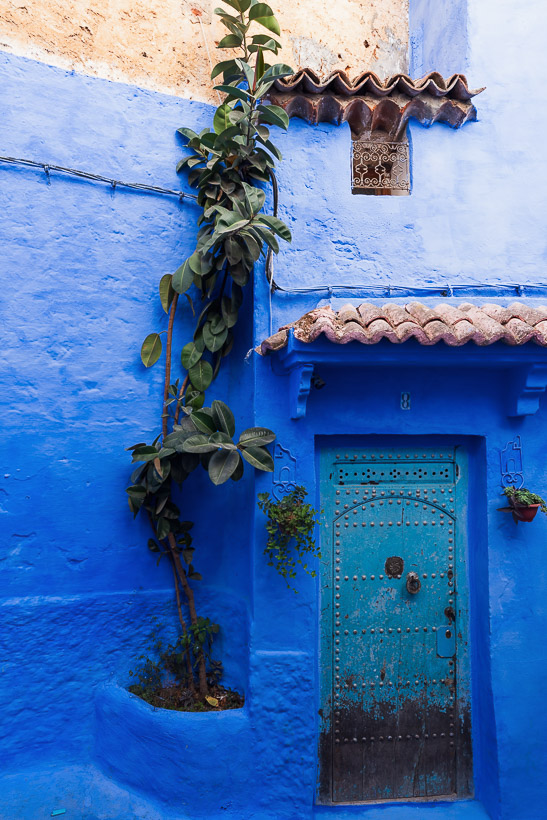
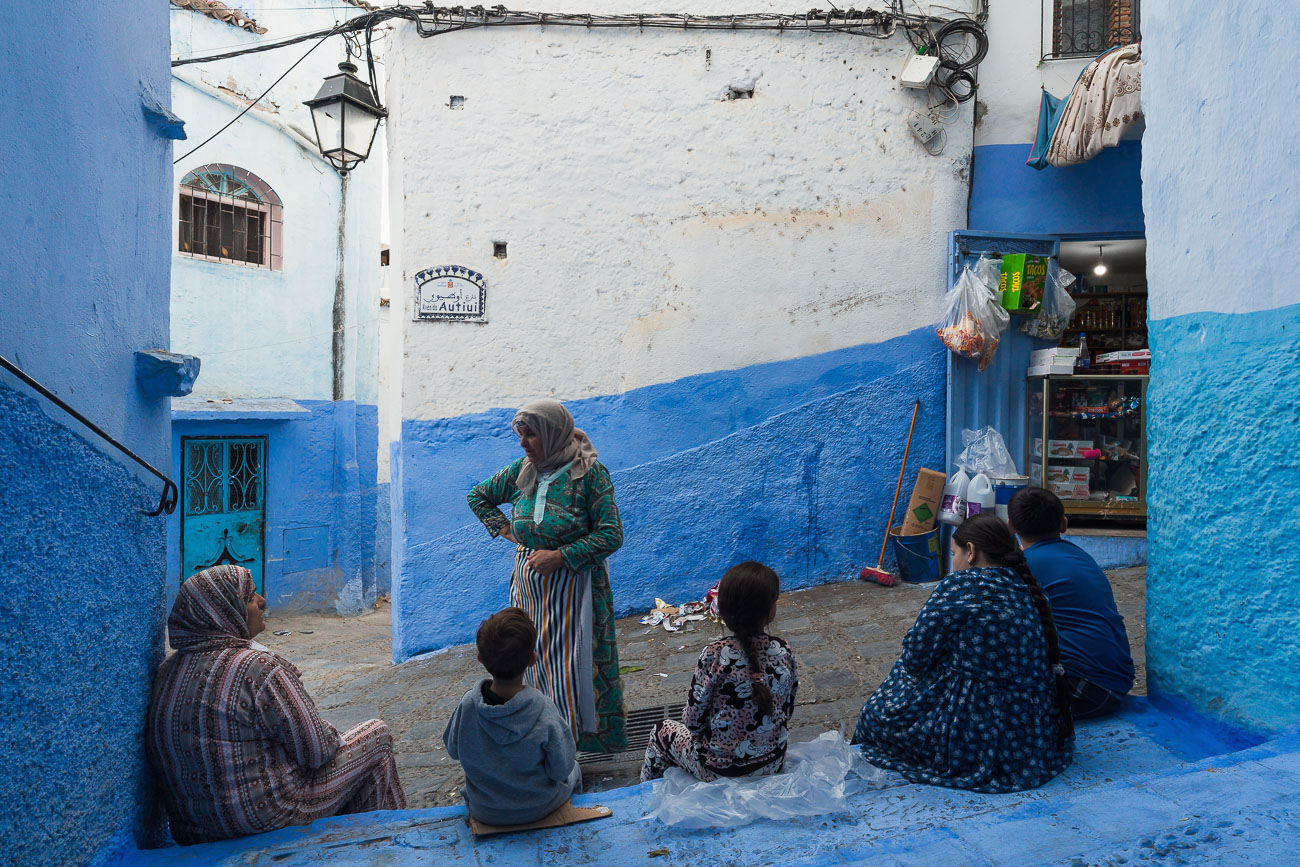
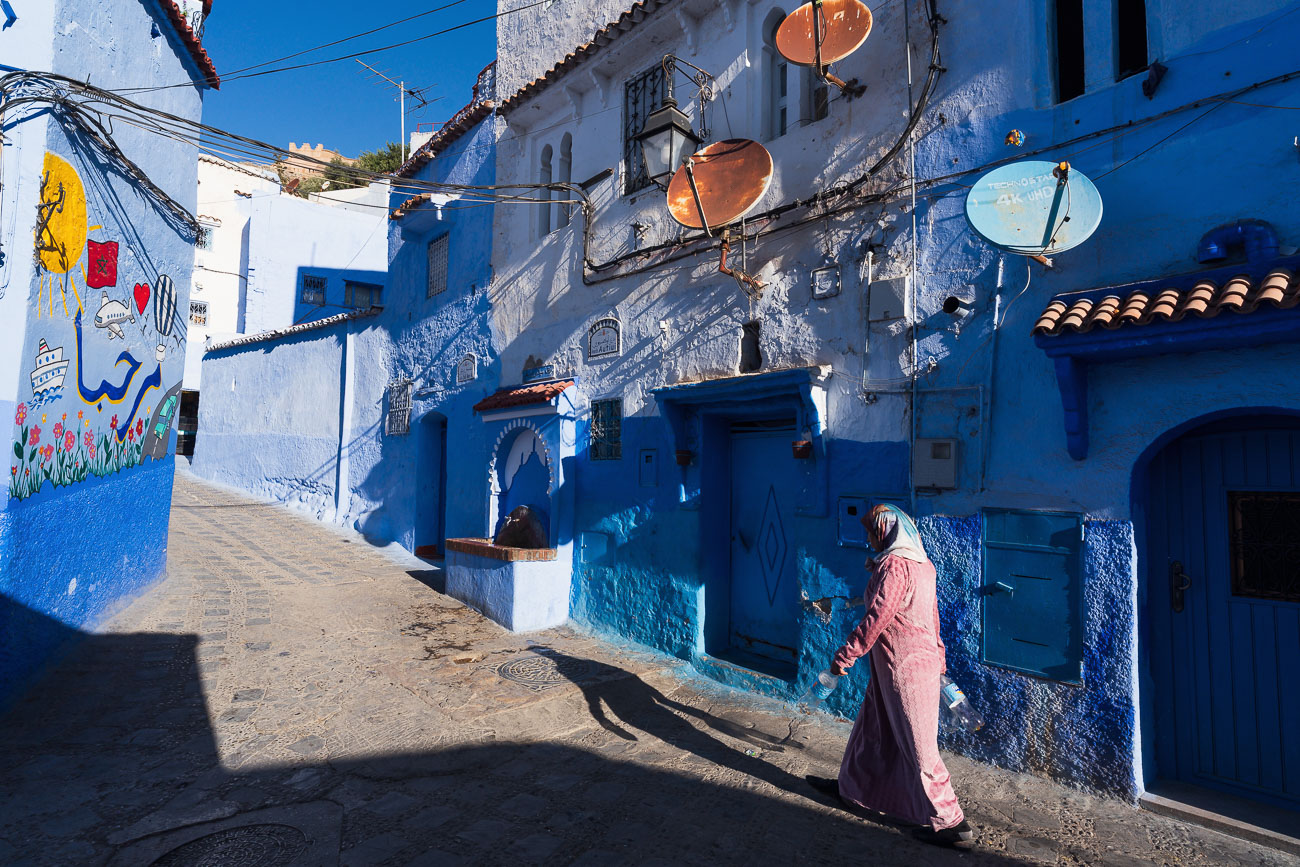
This, and other medinas in Morocco, reminded me a little of Cuba, in the way that life often takes place on the street in a way that’s more visible – outside of the confines of the dars (traditional apartments), yet contained within the narrow streets. People socialise, drink coffee, play football, fix cars and sell things, or wander to the local fountain to collect water.
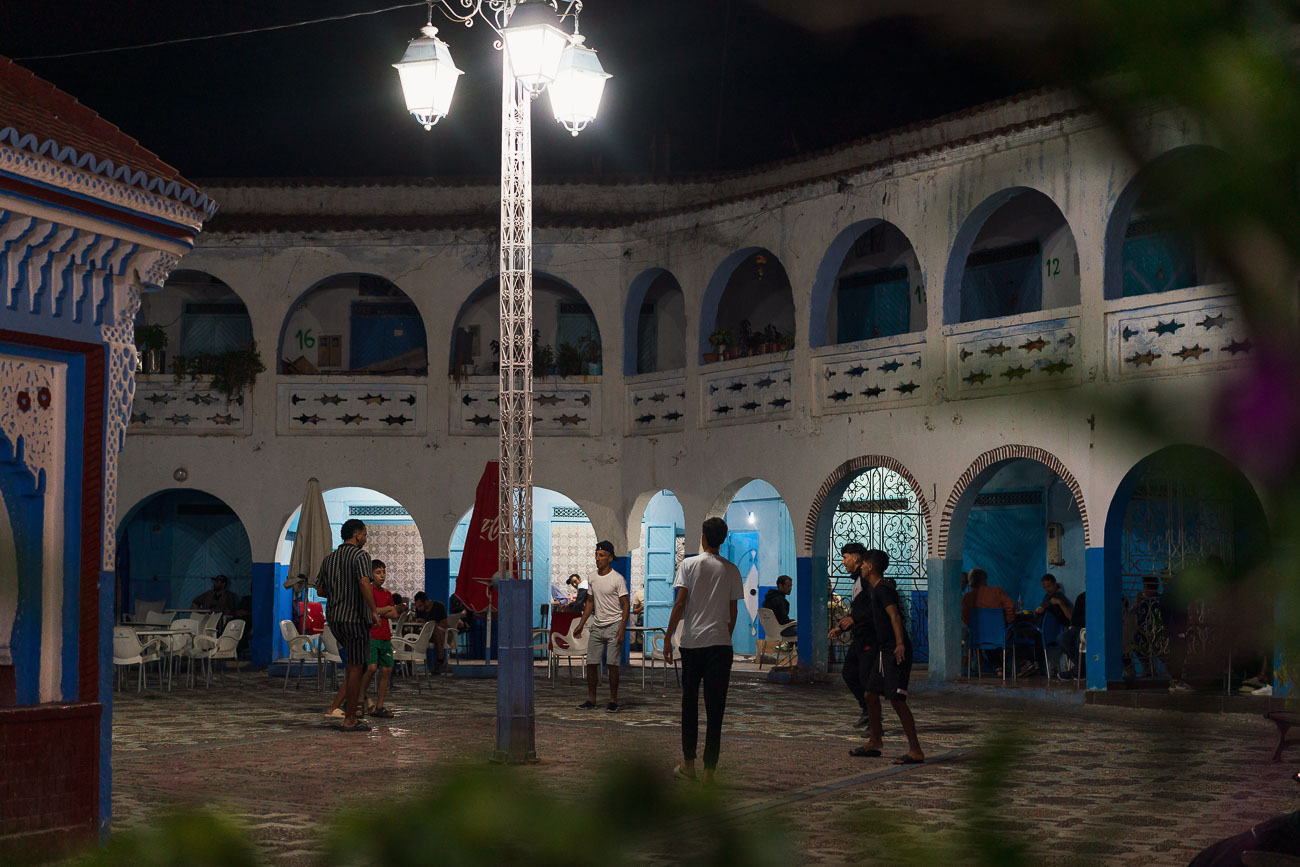
The plaza cafes were a good spot to sit and watch the world go by, while sipping sugary espresso accompanied with a whiff of hash smoke in the air.
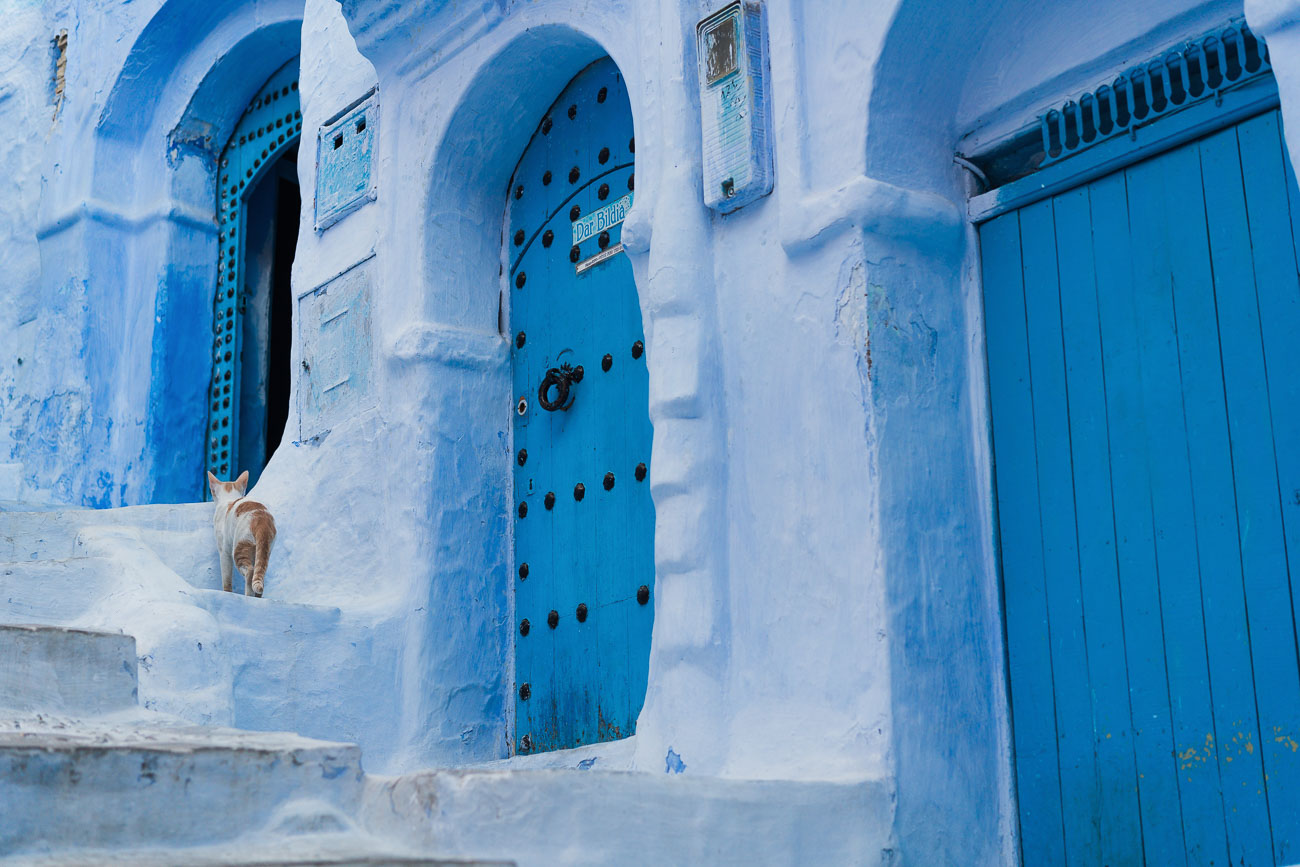
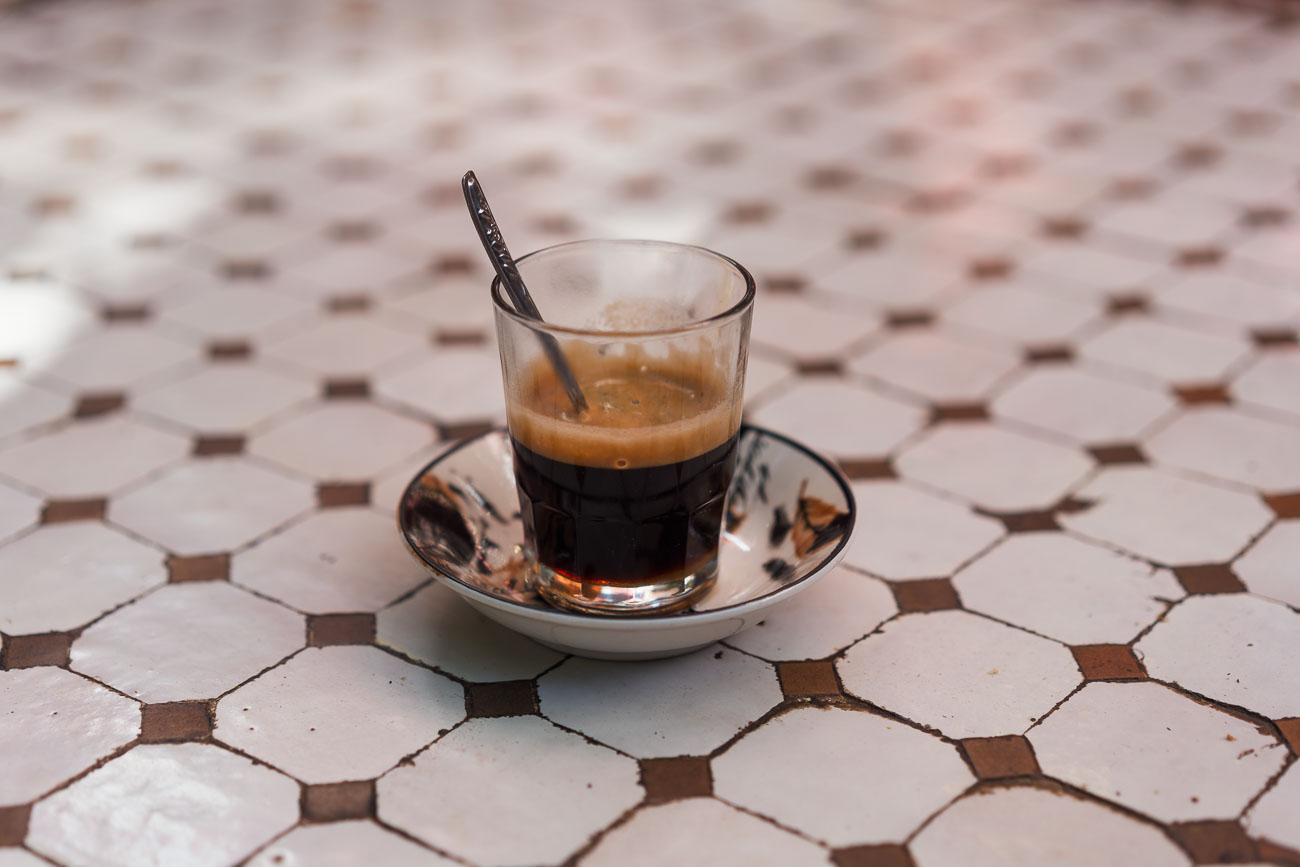
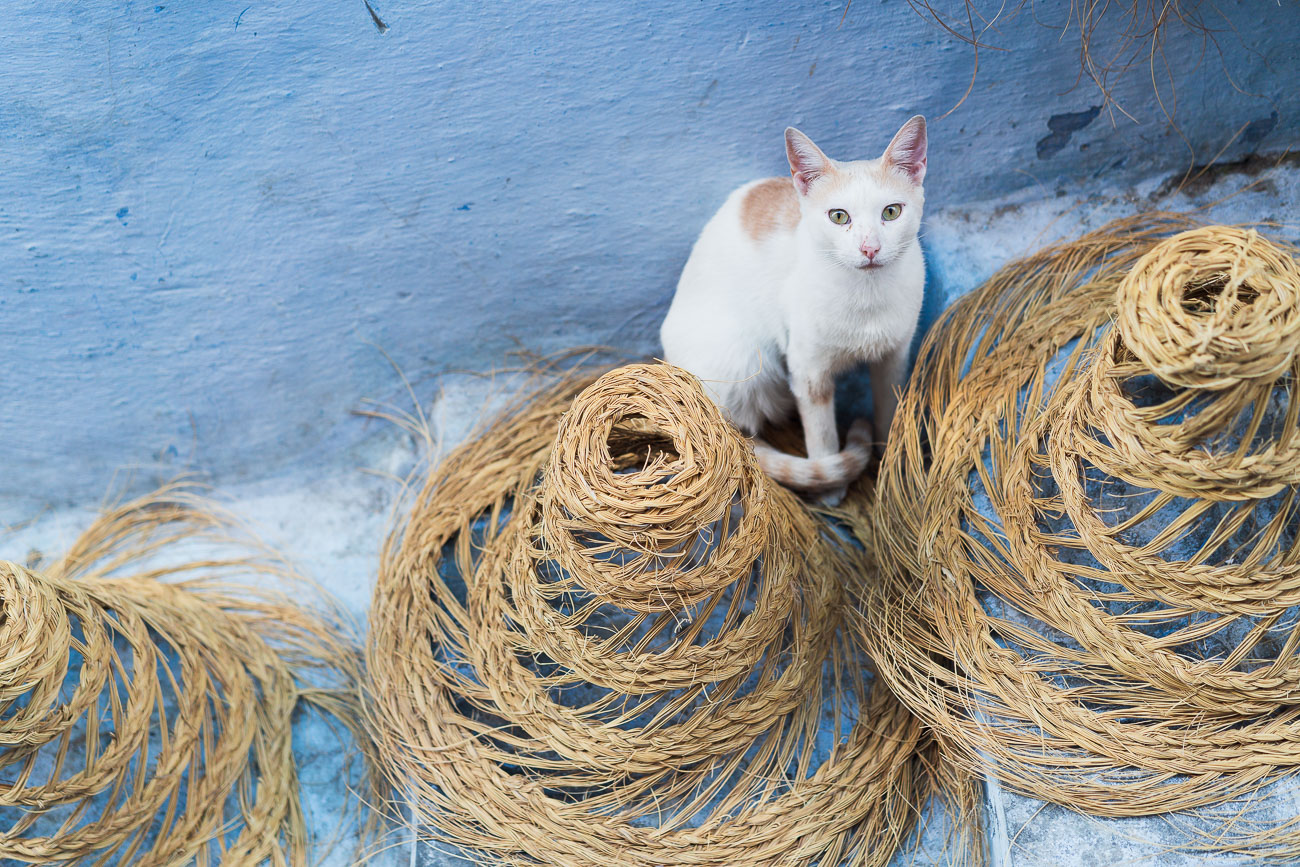
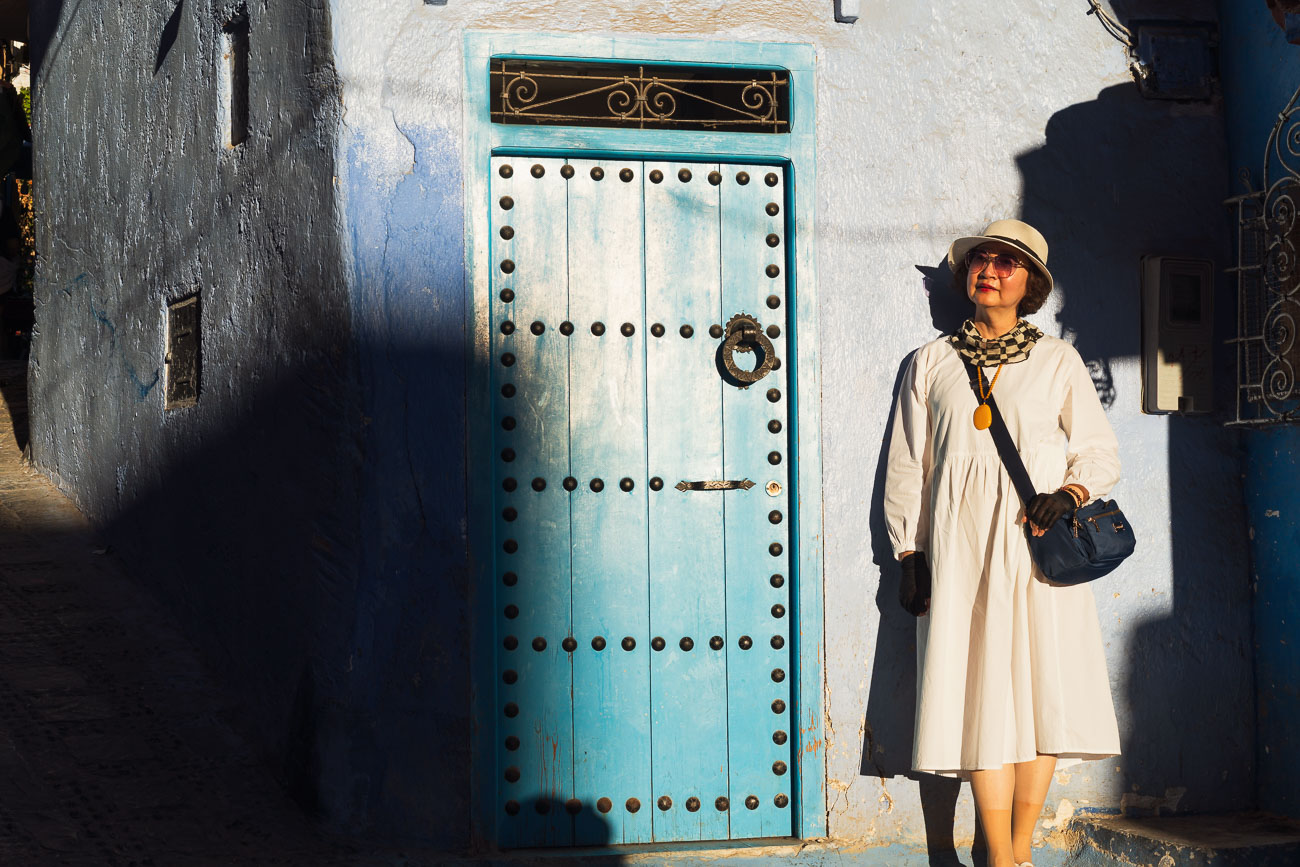
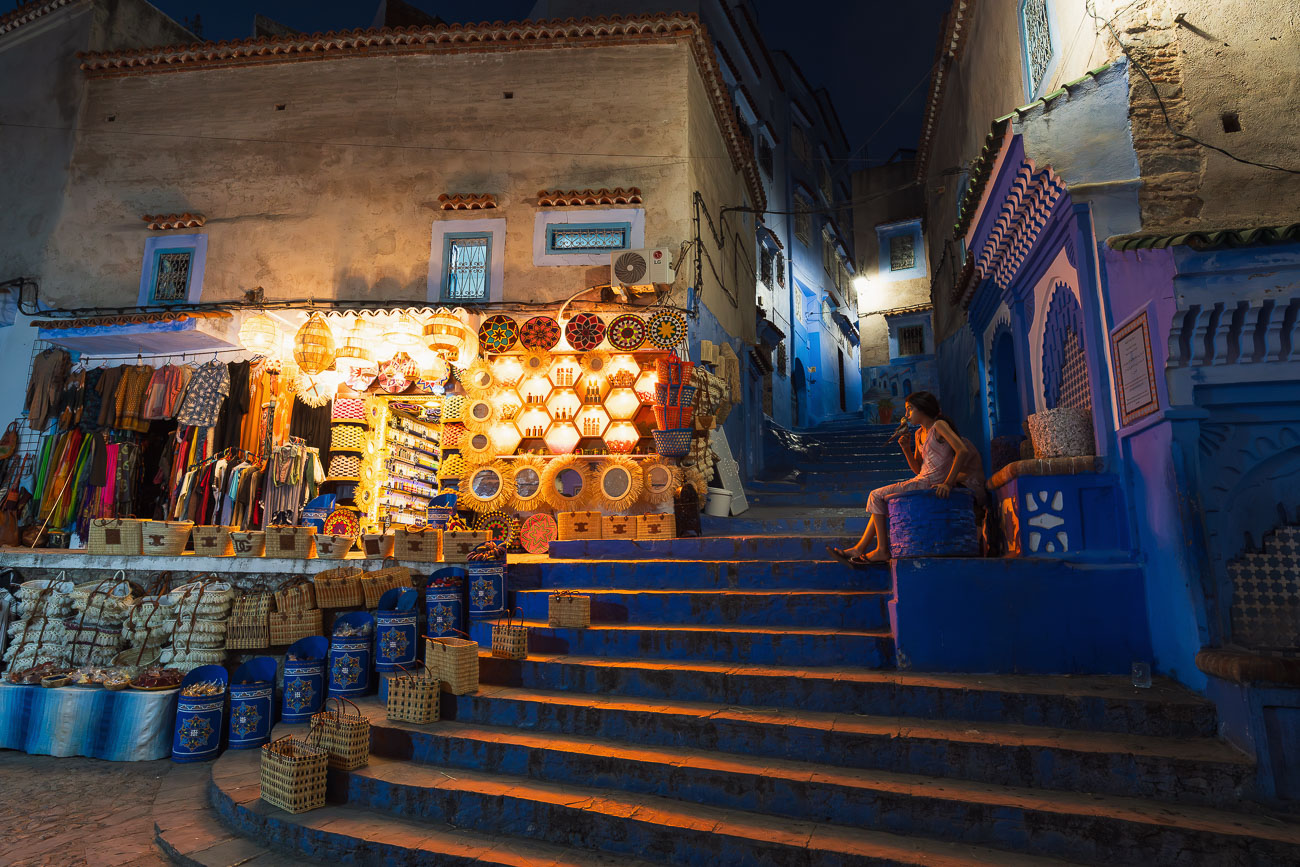
For photographers this city is a treat. The clear days and late autumn light meant warm tones and hard shadows which added another later of evocativeness to this living museum.
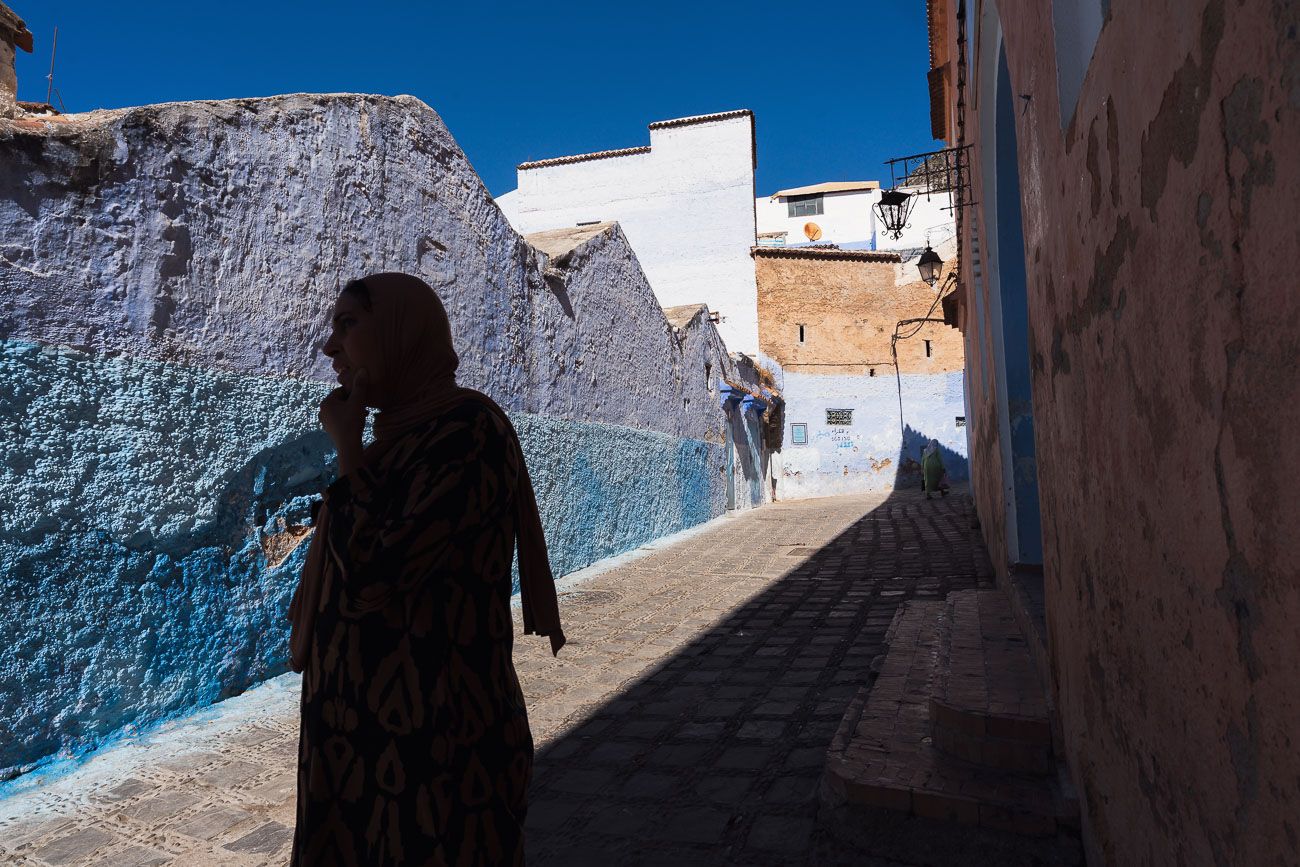
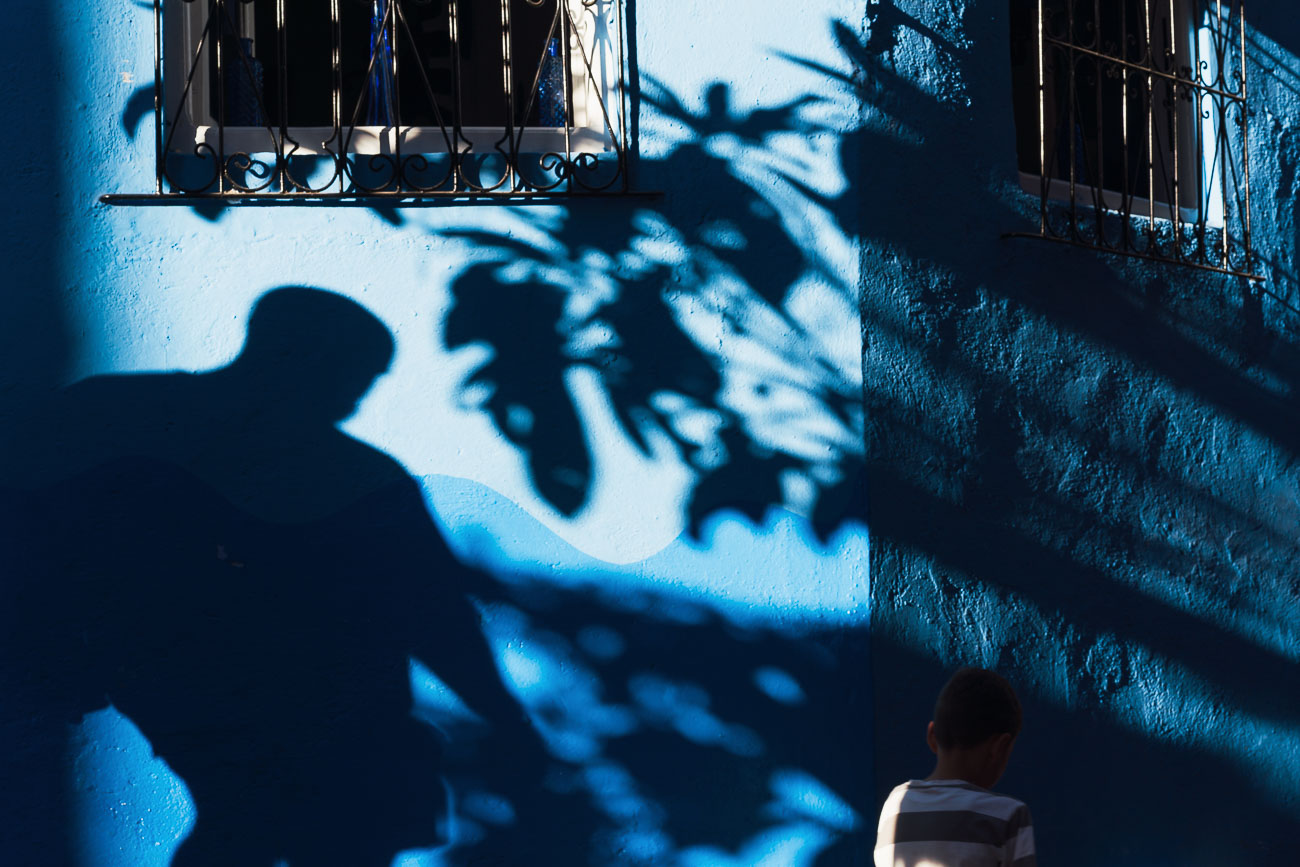
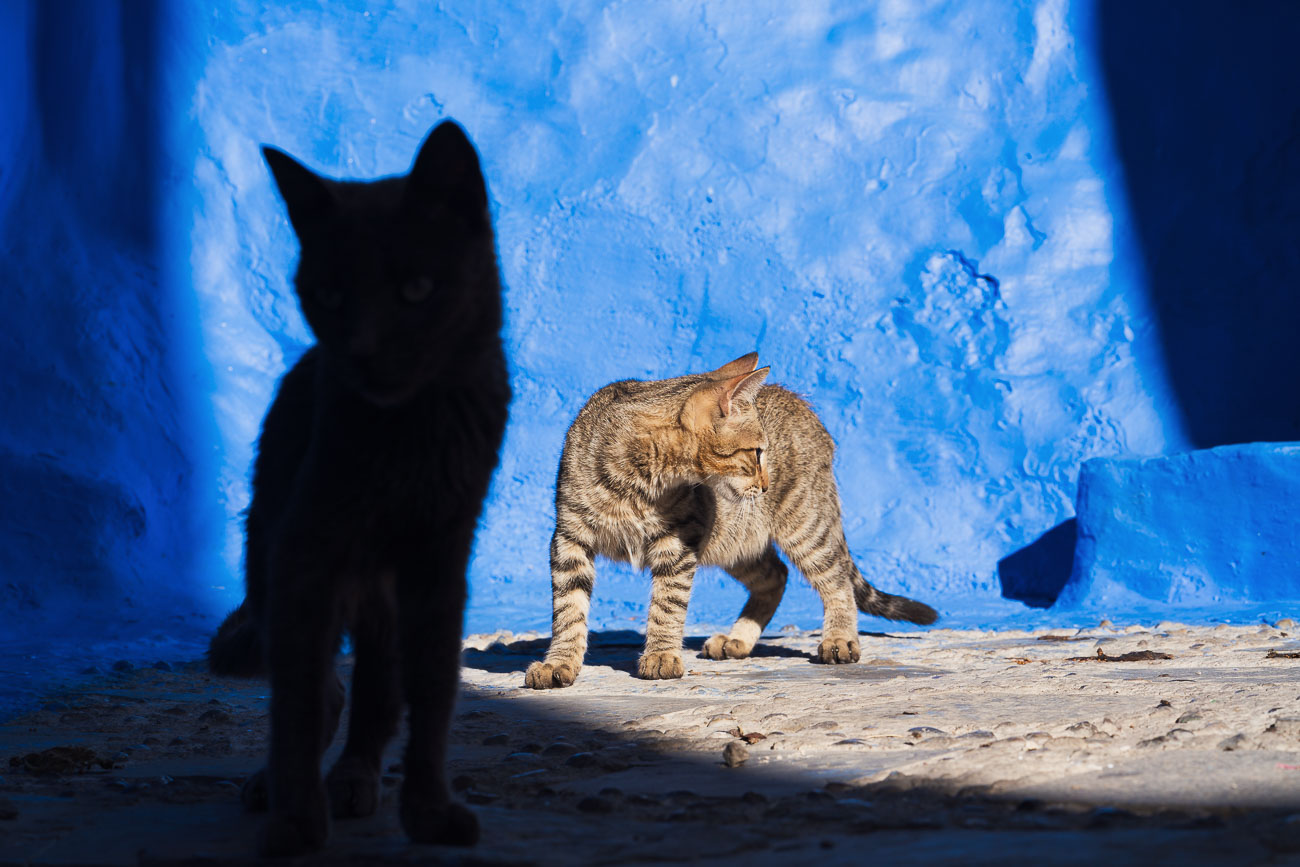
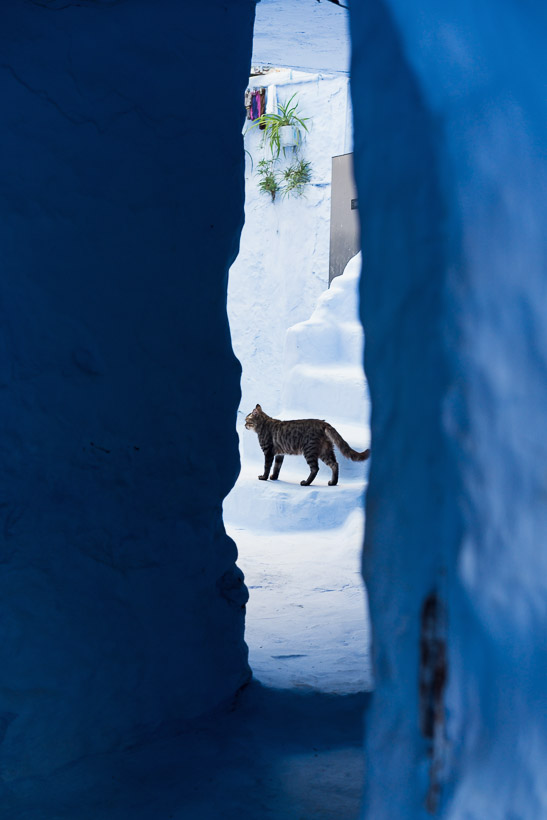
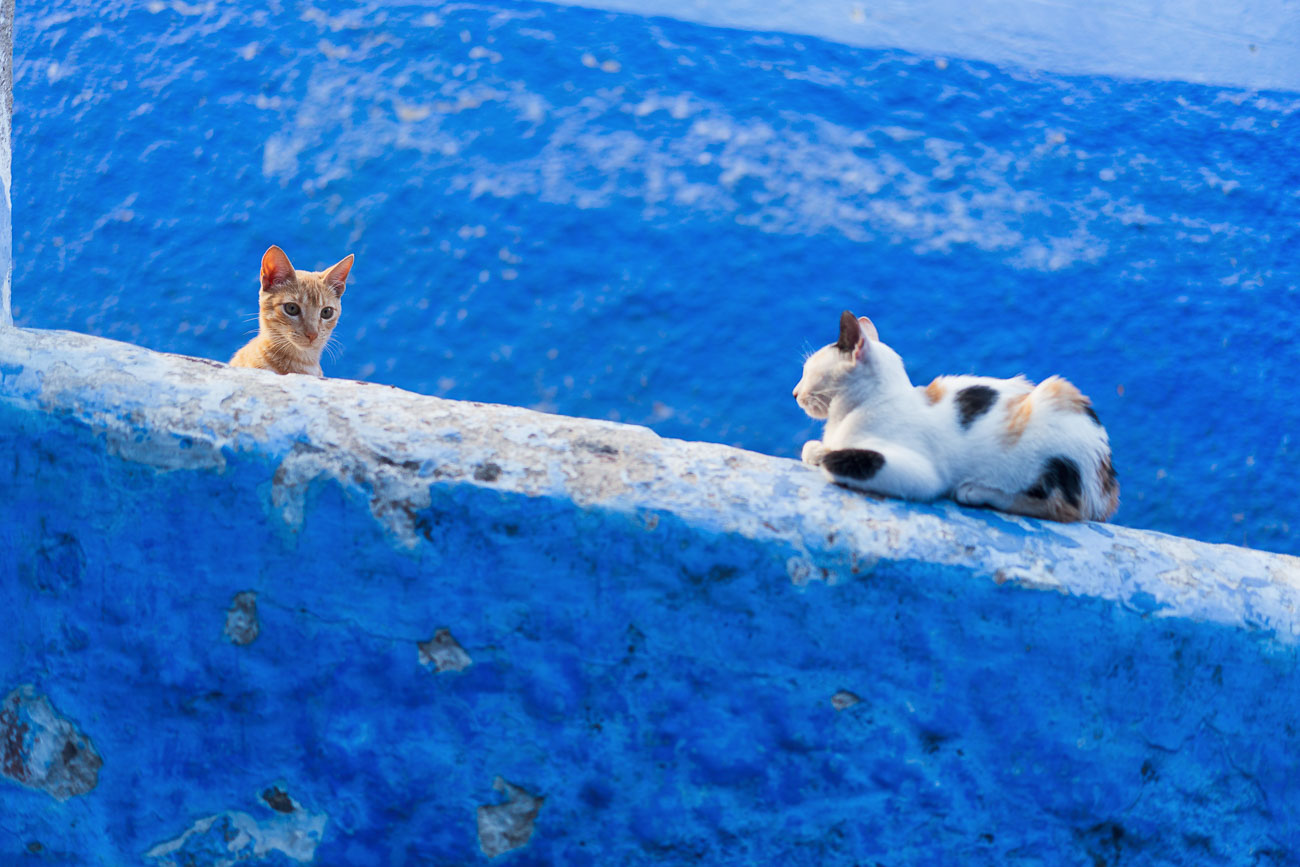
The numerous cats add another dimension of curiosity to Chefchaouen too. In the Muslim world, cats are revered for their ritual purity and cleanliness and allowed to enter homes and mosques. There’s a strong cultural tradition of feeding, sheltering and nurturing strays; cats which from the outside, at least, seemed more like community pets, than typical strays. We saw street cats with bandages, bowls of food and water. And while they didn’t always look the healthiest, they were usually cared for.
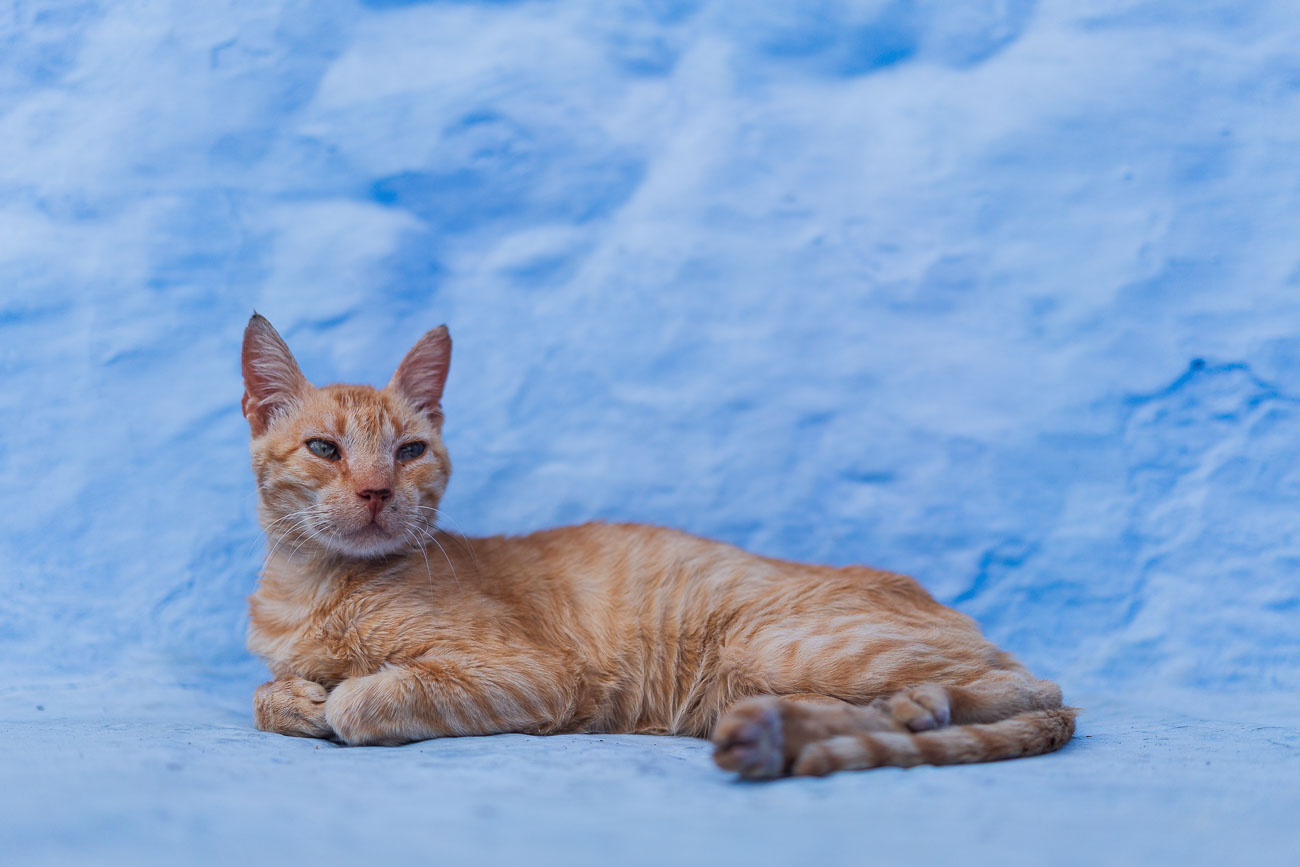
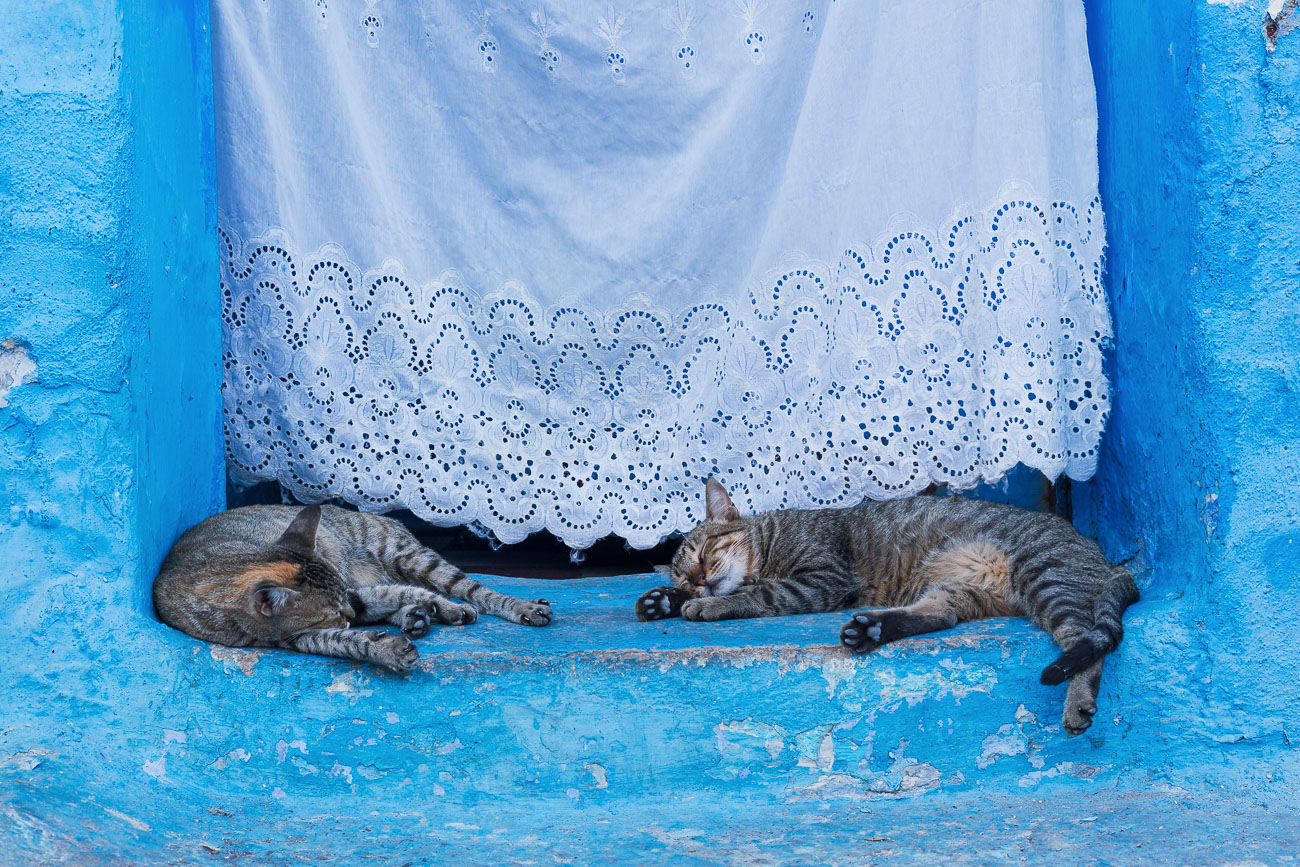
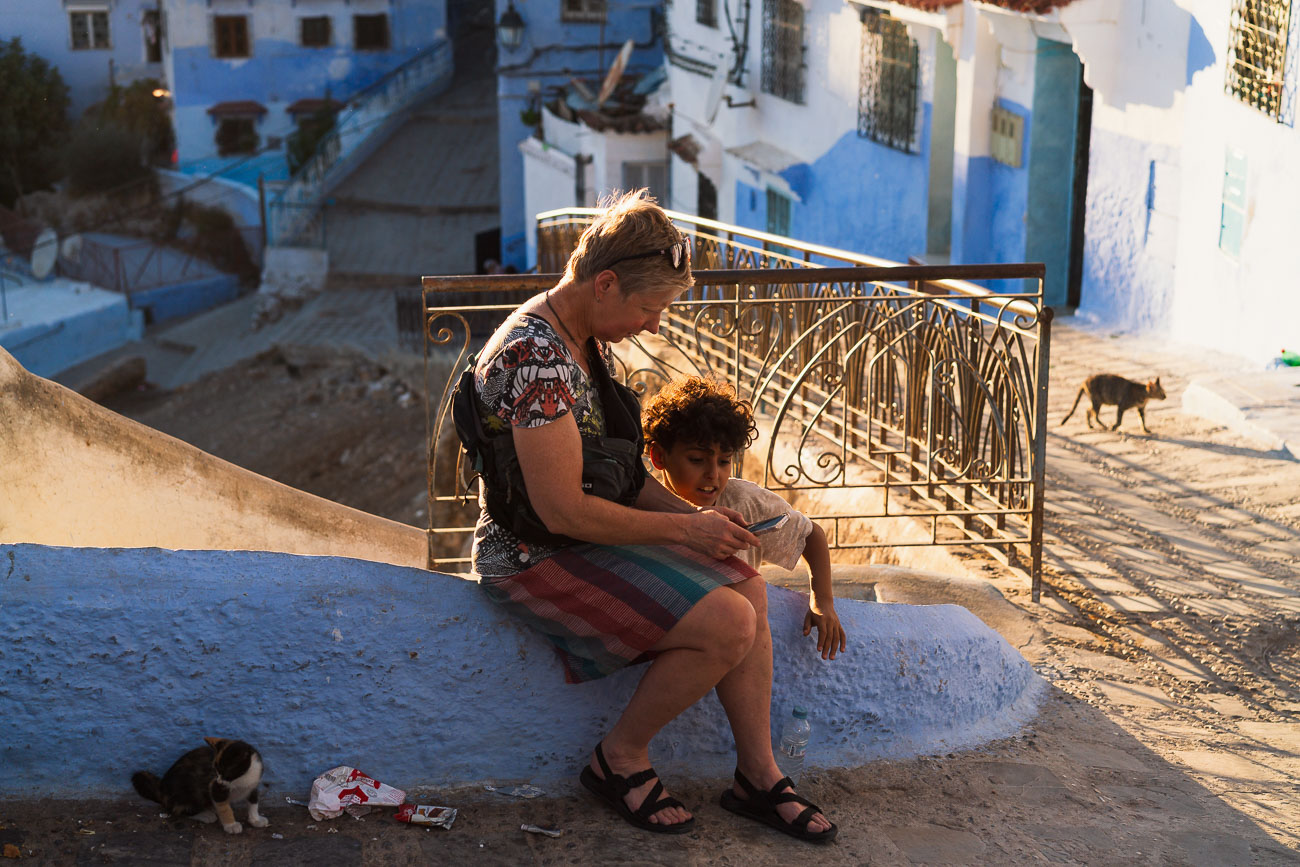
Hana always had time for a quick English lesson with the kids too, as we wandered the streets for two days, chasing the light, looking for good views and eating great food.
Say thanks with a one-off donation, or check out our Bikepacking guide.
If you’re enjoyed this story, you’re welcome to provide us some support for our web hosting and subscription costs with a donation or a book purchase (US$19.99). Thanks for reading!